English
 Spanish
 French
Flatbed vs Lowboy Trailer: Which Should You Choose?
When you’re in the heavy haul transportation business, understanding your equipment options can make the difference between a successful delivery and a costly mistake. Flatbed trailer trucks and lowboy trailers (sometimes called low bed trucks or lowbed trucks) are workhorses of the industry, but they’re not interchangeable. While both appear as open platforms at first glance, their engineering and applications vary dramatically. Knowing what is a flatbed versus what is a lowboy trailer isn’t just technical knowledge—it’s the foundation for making smart decisions that keep your freight safe, your operations legal, and your business profitable.
What Is a Flatbed Trailer?

LUEN Flatbed Trailer
Picture the most straightforward trailer design possible: that’s essentially what is a flat bed trailer. A flatbed trailer truck presents a completely flat, open deck without any sides, roof, or enclosed areas. This design philosophy prioritizes accessibility—you can load cargo from any direction, whether that’s the sides, rear, or even overhead with a crane. The flatbed height typically measures around 5 feet from ground level, creating a stable platform that’s still accessible for most loading equipment.
This elevated but manageable height makes flatbed trailers perfect for transporting wide loads, irregularly shaped cargo, or items with moderate height that still fall within the standard legal limit of approximately 8.5 feet. You’ll commonly see these trailers carrying construction steel beams, industrial pipes, lumber bundles, and various types of machinery. The beauty of a flatbed truck trailer lies in its versatility and cost-effectiveness—Flatbed Shipping often the go-to solution for general freight that doesn’t require specialized handling.
What Is a Lowboy Trailer?
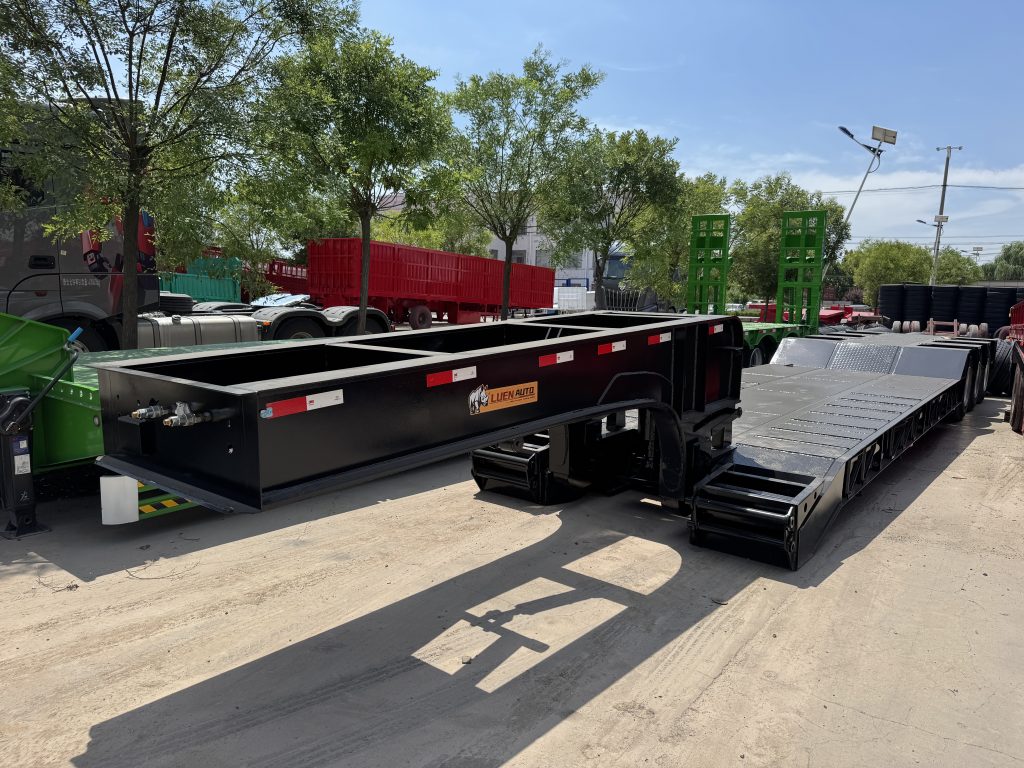
LUEN Rgn Lowboy Trailer
If you’ve ever wondered what is lowboy trailer technology, think of it as engineering specifically designed to overcome height limitations. A lowboy flatbed trailer features a dramatically lowered deck that sits just 1.5 to 3 feet above the ground—roughly half the flatbed height of standard trailers. This isn’t just about being lower; it’s about creating possibilities for transporting cargo that would otherwise be impossible to move legally on public roads.
The low boy truck design incorporates two strategic drops in the deck: one immediately after the gooseneck connection and another just before the rear wheels. This creates what truckers call a “well” in the trailer bed. The result? A low low bed trailer that can accommodate cargo reaching up to 12 feet in height while still complying with bridge clearance regulations. But the lowbed truck advantages go beyond just height—the lowered center of gravity significantly improves stability when you’re hauling massive, top-heavy equipment.
Many lowboy flatbed configurations come equipped with hydraulic ramps or removable goosenecks (RGN), making it possible to drive heavy equipment directly onto the trailer rather than lifting it with cranes. This is particularly valuable when you’re dealing with bulldozers, excavators, large agricultural machinery, or specialized industrial equipment that would be difficult or expensive to crane-load.
Relate:What Is Lowboy Trailers
Key Differences Between Flatbed Trucks and Lowboy Flatbed Trailers
Deck Height Configuration: The most obvious difference is elevation. While flatbed trailers maintain their flat deck at approximately 5 feet high, truck lowboy designs drop that deck dramatically to between 1.5 and 3 feet from the ground. This difference might seem small on paper, but it’s revolutionary in practice.
Maximum Cargo Height Capacity: Here’s where the engineering really pays off. Standard flatbed truck trailers can legally transport cargo up to about 8.5 feet tall, but lowboy flatbed trailer designs extend that capability to 12 feet or even higher with proper permits. This extra clearance opens up entirely new categories of freight.
Weight Handling Capacity: A typical flatbed of a truck can handle around 48,000 pounds of cargo, which covers most general freight needs. However, lowbed truck systems can manage 80,000 pounds or more, especially when equipped with additional axles and appropriate permits. This isn’t just about raw strength—it’s about distributing massive weights safely across the road surface.
Loading Accessibility: The flatbed truck trailer design allows easy access for forklifts, cranes, and other loading equipment from virtually any angle. Lowbed trucks, while more specialized, often require ramps, hydraulic systems, or removable goosenecks due to their low profile, but this trade-off enables the transport of self-loading equipment.
Operational Applications: Flatbed trailers excel at hauling lighter, more standardized loads across a wide variety of industries. Lowboy flatbed trailers serve the heavy equipment sector, specializing in oversized, overweight, and unusually tall machinery that simply can’t travel any other way.
Advantages and Ideal Uses
Flatbed Trailer Truck Benefits: The appeal of flatbed systems lies in their remarkable versatility. You can haul everything from steel beams to lumber bundles to medium-sized machinery without worrying about complex loading procedures or special permits. The relatively lower operating costs make them accessible for smaller operators, and the straightforward loading process means faster turnaround times at pickup and delivery points. These trailers are particularly ideal for construction materials like pipes and steel, lumber shipments, and general machinery that fits within standard height restrictions.
Lowboy Flatbed Trailer Advantages: When you’re dealing with cargo that pushes the boundaries of size and weight, what is lowboy technology becomes invaluable. The low deck height eliminates concerns about bridge strikes, while the lowered center of gravity provides enhanced stability during transport. These trailers are specifically engineered for heavy construction vehicles, large agricultural equipment, industrial machinery, and specialized equipment that would be impossible to move on standard trailers. The ability to drive equipment directly onto many lowboy configurations also eliminates crane costs and reduces loading time for heavy machinery.
Loading and Safety Considerations
The loading process reveals another fundamental difference between these trailer types. A flatbed lowboy trailer comparison shows that flatbed systems offer maximum accessibility—the open design of the flatbed of a truck allows loading crews to approach from multiple angles using cranes, forklifts, or other equipment. This flexibility often translates to faster loading times and lower handling costs.
Lowbed trucks, however, often utilize specialized loading methods. Many feature removable goosenecks that allow the front of the trailer to be detached, creating a ramp for driving heavy equipment directly onboard. Others use hydraulic ramps or loading docks designed specifically for low-profile access.
Regardless of the trailer type, cargo securement remains critical. Both flatbed truck trailers and lowboy flatbed configurations require proper use of straps, chains, binders,Dunnage,and other securement devices according to international transportation regulations. The goal is preventing any shifting or movement during transit that could cause accidents or damage. The lower center of gravity inherent in lowboy flatbed trailer designs provides an additional safety margin when transporting bulky, heavy loads, but proper securement remains essential.
Conclusion
The decision between a flatbed truck trailer and a lowboy flatbed trailer ultimately comes down to matching your equipment to your cargo requirements. Understanding what is a flatbed helps you recognize when you need maximum versatility and cost-effectiveness for loads within standard height and weight parameters. Knowing what is a lowboy trailer helps you identify when you’re dealing with oversized, tall, or exceptionally heavy equipment that demands specialized handling.
Flatbed trailers serve as the reliable workhorses for everyday freight movement, handling diverse cargo within legal limits while maintaining operational efficiency. Lowboy trailers represent specialized engineering solutions for the heavy hauling industry, enabling the safe and legal transport of equipment that would otherwise be impossible to move. The low bed truck design, with its reduced flatbed height and enhanced stability, opens up transportation possibilities that keep major construction, mining, and industrial projects moving forward.
For logistics managers, truckers, and shippers, understanding these distinctions isn’t just technical knowledge—it’s the foundation for making informed decisions that ensure efficient, safe, and compliant transport operations. Whether you’re moving standard construction materials or massive industrial equipment, choosing the right trailer type protects your cargo, your drivers, and your business reputation.
LUEN: Your Trusted Partner for Premium Flatbed and Lowboy Trailers
When you’ve decided on the right trailer type for your operations, quality manufacturing makes all the difference. LUEN specializes in producing high-performance flatbed trailers and lowboy trailers engineered to meet the demanding requirements of heavy haul transportation. Our flatbed trailer trucks combine durability with versatility, while our lowboy flatbed trailers feature precision-engineered low deck designs that maximize your cargo capacity within legal height limits.
Every LUEN flatbed trailer and lowboy trailer undergoes rigorous quality testing to ensure reliability in the most challenging conditions. From standard flatbed configurations to specialized low bed truck designs, we provide transportation solutions that help your business move forward safely and efficiently. Choose LUEN for trailers that deliver performance you can depend on, project after project.