English
 Spanish
 French

Fuel Tanker Loading and Unloading: Systems, Equipment, and Safety Procedures
Loading and unloading fuel tankers is one of the most hazardous operations in the petroleum industry. Each year, millions of gallons of flammable liquids are transferred through these systems, and a single mistake can lead to fires, explosions, or environmental disasters. Workers must take added precautions when handling these materials to avoid potentially catastrophic consequences.
A proper fuel tanker unloading system is more than just pumps and hoses. It requires dedicated safety equipment, trained personnel, and documented procedures that work together to transfer fuel safely. Today’s tanker unloading systems have evolved to include grounding networks, vapor recovery, leak detection, and automated shutoff capabilities. Understanding how these components work together is essential for safe operations.

LUEN Fuel Tanker Trailer
System Framework and Equipment
Core Components of Fuel Unloading Systems
Modern fuel tanker unloading systems consist of several critical components that must work in harmony. Each piece plays a vital role in preventing accidents and protecting workers.
Grounding and Anti-Static Protection is the first line of defense against ignition. Static electricity buildup on a tanker truck can create a dangerous spark that ignites flammable vapors. Advanced grounding systems can ground a tanker truck to 10 ohms or less and continuously monitor this connection throughout the entire operation. The reason this matters is simple: a single static discharge in a fuel-rich environment can produce a catastrophic explosion.
Vapor Recovery Systems serve a dual purpose. They protect the environment by capturing greenhouse gases that would otherwise escape into the atmosphere, and they protect workers by reducing vapor exposure. Bottom loading systems are particularly effective here because they minimize the agitation that releases vapors in the first place.
Leak Detection has become increasingly sophisticated. Modern fuel unloading equipment includes sensors that constantly watch for leaks during transfer. If a leak is detected, the system triggers an automatic shutdown to prevent spills before they become serious. This technology has dramatically reduced the number of reportable incidents at fuel terminals.
Pressure and Temperature Monitoring helps operators spot problems before they escalate. Sensors track these conditions in real-time, alerting workers to any unusual changes that could indicate equipment failure or unsafe operating conditions.
Automated Shutoff Systems represent the final safety net. These systems use fast-response electronics to detect overfill conditions and stop flow immediately. This is especially critical during bottom loading operations where visual inspection of tank levels is difficult.
Equipment Options and Trade-Offs
Selecting the right equipment for your fuel tanker unloading system requires careful consideration of several factors. Different configurations offer different benefits and limitations.
When choosing tanker trailers, quality matters. LUEN specializes in manufacturing fuel tanker trailers with medical-grade stainless steel construction, offering capacities from 35-45m³ with corrosion-resistant designs suitable for chemical-grade fuels. Their aluminum alloy gasoline fuel tanker semi-trailers feature high-quality steel construction with advanced technology and strict production processes, ensuring reliable performance and simple operation.
Bottom Loading vs. Top Loading
There are two fundamental ways to load fuel into tankers, and the choice between them has significant safety implications.
Bottom loading is generally safer for fuel products. The reason is that top loading agitates the fuel, which leads to both vapor and static buildup. This is especially dangerous since neither vapors nor static charges are visible, and a single spark can trigger an explosion. Bottom loading eliminates this agitation by introducing fuel from the bottom of the tank, reducing turbulence and vapor generation.
Moreover, bottom loading means operators work at ground level rather than climbing on top of tankers. This eliminates exposure to harmful gaseous vapors and greatly reduces the risk of falls. Workers no longer need to work at height, removing one of the most common causes of injury in fuel loading operations.
Top-loading, by contrast, generates considerable turbulence and vents fumes directly to the atmosphere. Splashing and turbulent flow create static electricity buildup even when tankers are properly grounded. Workers also face dangers from climbing on tankers and breathing fuel vapors at the highest concentration point.
That being said, bottom-loading islands are simpler and cheaper to build than top-loading racks. This leads to safer loading in a shorter time with less chance of spillage and vapor loss, making it the preferred choice for modern fuel terminals.
Pumps and Transfer Methods
Fuel tanker unloading systems typically use positive displacement flowmeters combined with pumps and valves that can be controlled based on preset quantities. This works much like filling your car at a gas station, where the pump stops automatically when the desired amount is reached.
Several pump types handle tanker discharge effectively. Centrifugal pumps work well for high flow rates of low viscosity liquids like gasoline and diesel. Peristaltic pumps handle more viscous fluids, while air-operated double diaphragm pumps are ideal for hazardous fluids because they eliminate ignition sources.
Flow rates depend heavily on pump capacity and meter size. Modern systems can handle up to 24,000 liters per hour when unloading to above-ground tanks through pumps. Gravity unloading systems, while simpler, are limited to around 6,000 liters per hour maximum.
Vapor Recovery Integration
Vapor recovery systems require modifications to service stations, tank trailers, and terminal equipment. These systems include a separate vapor transfer port to capture fuel vapors during unloading and return them to the delivery truck or process them through carbon filters. This technology has become increasingly important as environmental regulations tighten.
Safety-Focused System Design
Safety must be built into fuel unloading systems from the ground up, not added as an afterthought.
Fuel unloading skids are skid-mounted pumping systems designed specifically for fuel storage facilities. They incorporate safety interlocks like positive tanker grounding to ensure safe operation with flammable fuels. For industrial applications handling potentially hazardous liquids like fuel and oil, these systems come with certified flameproof enclosures and flameproof pump starters.
Loading and unloading circuits must remain separate to prevent cross-contamination between products. This separation is critical when facilities handle multiple fuel grades or different types of petroleum products.
Quick release systems provide an additional safety layer by offering automatic disconnection if a tanker accidentally drives away during operations. These systems simultaneously shut off product flow both upstream and downstream, preventing catastrophic spills and equipment damage.
Pre-Operation Readiness

LUEN Aluminum fuel tanker
Proper preparation before starting any fuel transfer operation is crucial. Rushing through these steps or skipping them entirely accounts for a significant percentage of loading and unloading accidents.
Site and Vehicle Readiness
Before any fuel unloading begins, take time to prepare the work area properly. Position the tanker in the designated unloading location and turn off the engine. Ensure that all electrical equipment in the truck is also turned off to reduce the likelihood of sparks.
Mark off a perimeter to ensure that no one accidentally enters the unloading area. The site needs proper ventilation and adequate lighting for safe operations, especially during night shifts or in enclosed spaces. Use wheel chocks to immobilize the vehicle and prevent it from rolling during operations. Some facilities also use interlocks that prevent flow unless the vehicle is properly secured.
Vehicle and Cargo Verification
Inspect the truck, tank, and unloading equipment thoroughly. Ensure that there are no hazards or obstructions in the unloading area. If you detect any odor, stop what you are doing and try to identify and remedy the issue before proceeding.
Make sure that the storage tank contains the same substance that you are unloading and that the tank can accommodate all the materials that you are delivering. This step prevents mixing different fuel types and avoids contamination that could compromise product quality.
Quality fuel tanker trailers feature proper compartment configurations and reliable structures. LUEN fuel tank semi-trailers adopt cross-beam frame structures with manganese plate welding and automatic submerged arc welding for enhanced durability. Modern tankers include safety equipment such as spillproof probes, European standard tank mouths with built-in breathing valves, and emergency discharge capabilities.
Check the tanker’s seals and labels carefully. Look for any signs of leaks or unusual odors before connecting hoses. Verify that the trailer is the right one to transport that particular chemical and ensure that all required hazmat labels are present and legible.
Grounding and Static Control
Static electricity poses one of the greatest ignition risks during fuel transfer operations. When grounding a vehicle, follow this critical sequence: verify the grounding clamp is securely connected to the ground, verify the loadout pipe is bonded with the ground, and connect the grounding clamp to the body of the tank truck.
The industry recommends grounding systems that measure and monitor resistance in the grounding circuit continuously. These systems verify the ground connection is complete before allowing loading or unloading to begin. This is not optional – it is a crucial safety requirement.
Follow a “Clamp On First, Clamp Off Last” protocol without exception. This means attaching the grounding clamp before starting any operation and keeping it connected until all transfer activities are complete and all equipment is disconnected.
Documentation Readiness
Prepare transfer records before starting operations. Note the batch numbers, fuel types, quantities expected, and all personnel involved. Ensure that communication protocols are in place for emergencies, including contact numbers for emergency responders and facility management.
This documentation serves multiple purposes. It helps with regulatory compliance and audits, supports inventory tracking, and provides a record in case of incidents or disputes about delivered quantities.
Loading Procedures
Loading fuel into tankers requires careful attention to detail and strict adherence to safety procedures. The following steps apply to situations where flammable bulk liquids are being loaded from storage tanks into tanker trucks.
Core Loading Steps
Start by conducting a thorough preloading inspection. Ensure that all equipment is in working order and that there are no leaks. Check inside the tanker trailer compartments and make sure that they are empty to avoid contamination with previous loads.
Position your trailer in the designated loading area so the drop tube is positioned vertically into the tank and reaches as far down as possible. This reduces agitation and minimizes vapor generation during filling.
Turn off the truck engine and ensure that all electrical devices are off, including the radio and lights. This is especially important when loading flammable liquids because the slightest spark could start a fire or explosion.
When filling, mixing, blending, or transferring flammable and combustible materials, it is crucial to utilize a truck grounding system. The truck ground system allows built-up static charges to flow into the ground to avoid a dangerous spark that could ignite the chemicals.
Bottom vs. Top Loading Considerations
Loading gasoline below the fill line reduces product movement, sloshing, and vapor creation during transport. Bottom loading fuel trucks eliminate access to the air pocket that forms at the top of the tank as the load decreases and product churns during transport.
Loading a tank truck from the bottom keeps the operator standing safely on the ground throughout the loading process, usually at the control station ready to react quickly in case of an incident. This is a significant safety advantage over top loading where workers must climb onto the tanker.
When top loading is necessary, use closed configurations and vapor control systems to reduce worker exposure and minimize emissions. Even with these precautions, top loading remains inherently more hazardous than bottom loading.
Monitoring and Controls
If you are loading a compartmentalized tanker, check to see if all compartment valves are closed. The only compartment that should be open is the one being filled. The others must remain closed to prevent cross-contamination and overfilling.
If using a meter stop, set it to the desired amount to prevent overfilling and spills. Leave adequate room for thermal expansion – fuel expands when it warms up, and an overfilled tank can rupture or leak.
Open the loading valve to start the flow. When loading flammable or combustible chemicals, it is important to start slowly – less than 120 gallons per minute for the first 6 inches of a compartment. Slow loading helps to minimize static buildup during the critical initial fill period.
Stay alert and remain near the truck until loading is complete. Verify that the pre-set meter countdown works properly and check for leaks throughout the loading process. Watch for unusual sounds, temperature changes, or pressure spikes. Be ready to hit the emergency stop if anything looks wrong.
Electronic sensors automatically detect if fuel has reached maximum capacity during loading, sending a signal to stop flow if an overfill is detected. This technology is especially helpful for bottom loading where it can be hard to visually confirm how full each compartment is.
Post-Loading Wrap-Up
When loading is complete, close the loading valve. Leave the drop tube in the tank for several minutes to ensure that it is completely drained. Once empty, remove the drop tube and close the dome cover securely.
If you are loading multiple compartments, follow these steps to load each one in sequence. Disconnect and stow loading arms, close fitting box doors and secure them, disconnect the vapor recovery hose if applicable, and disconnect the grounding cable last.
Drain any residual fuel from hoses back into the system. This prevents spills and reduces vapor emissions. Conduct a final inspection and document the load for tracking purposes. Walk around the truck and ensure that all equipment has been disconnected and that there are no obstructions near the truck.
Unloading Procedures
Tanker truck unloading procedures depend on the materials being transported, but certain fundamental safety steps apply to all operations. The following sequence covers typical unloading of bulk liquids into storage tanks.
Site Setup and Safety
Set up a secure unloading zone with proper ventilation and safety barriers. Position the tanker in the designated unloading location and turn off the engine and all electrical equipment in the truck.
Ensure that there are no hazards or obstructions in the unloading area and mark off a perimeter to prevent anyone from accidentally entering during operations. Verify that receiving tanks are ready and compatible with the cargo being delivered.
Make sure that the storage tank contains the same substance that you are unloading and that the tank can accommodate all the materials that you are delivering. This verification step is critical to prevent dangerous mixing of incompatible products.
Connection and Transfer Control
Connect the truck grounding system first, before making any other connections. This is a non-negotiable safety requirement.
Uncap the discharge connection and attach the unloading hose. Ensure that all receiving valves are closed before proceeding. Attach the discharge hose to the correct receiving line and storage tank, double-checking that you have the right connections.
If the chemicals you are unloading are prone to releasing vapor, utilize a vapor recovery system. This protects workers from exposure and prevents environmental releases.
Open the internal safety valves for no more than 2 of the tank compartments being unloaded at one time. Opening only two compartments at a time helps maintain control and reduces the chance of problems during unloading.
Process Monitoring
Open the discharge valve slowly to ensure that there are no leaks. A sudden full opening can create pressure surges that damage equipment or cause connections to fail.
Remain alert and near the truck throughout the unloading process. Constantly check for leaks, overfills, and other potential issues. Trained personnel should supervise continuously – never leave an active transfer unattended.
Monitor pressure and temperature indicators throughout the fuel unloading process. Watch vapor recovery systems to ensure they’re working properly. Any unusual readings should trigger an immediate investigation and possible shutdown.
De-connection and Closeout
Make sure to drain all products from the tank completely. Leaving products in the tank is not only wasteful but may also be unlawful depending on your location and the materials being transported.
Close all the valves that were opened prior to unloading. Check carefully that valves haven’t accidentally shut before compartments are completely drained. Purge lines to remove remaining fuel, then disconnect the grounding system last, following the “Clamp Off Last” rule.
Complete all required paperwork including transfer records with actual quantities delivered. This documentation is essential for inventory control and regulatory compliance.
Conduct a final inspection of the truck and unloading area before the truck leaves. Check for any spills or equipment issues that need attention. Only after this final check should you remove the truck from the unloading area.
Special Case Considerations
While standard procedures cover most situations, certain circumstances require additional precautions and specialized knowledge.
Multi-Compartment Operations
Modern fuel tanker unloading systems with multiple compartments need careful sequencing to prevent mixing different fuel grades. Sequencing controls prevent opening the wrong compartments or overfilling across sections, ensuring quality assurance throughout the transfer process.
Loading multiple compartments requires careful tracking of which fuel types go where. Use interlocks that prevent cross-contamination between different products. Label each connection clearly and verify connections before opening valves.
The consequences of mixing fuel grades can be severe, ranging from product degradation to complete loss of valuable inventory. Take the time to verify each step when working with compartmentalized tankers.
VOC and Environmental Controls
Hydrocarbon vapors from petroleum products contribute to air pollution and pose health risks to workers. Vapor recovery systems help facilities meet environmental regulations while recovering valuable product that would otherwise be lost to the atmosphere.
When bottom loading equipment is installed correctly, near-zero vapor emissions can be achieved. This represents a significant improvement over older top-loading systems that vented vapors directly to the atmosphere.
Closed-system loading and unloading keeps fuel vapors contained. This protects workers from exposure and prevents air pollution. Many facilities implement vapor recovery to meet regulatory requirements and environmental standards.
Food-Grade and Regulatory Compliance
Food-grade cargo requires extra cleaning between loads to prevent contamination. These tankers need special certifications and sanitation procedures that go beyond what is required for petroleum products. Keep food-grade tankers separate from chemical or fuel transport to maintain purity standards.
LUEN manufactures fuel tanker trailers with multiple material options including carbon steel, stainless steel (304/316L grade), and aluminum alloy to meet different cargo requirements. Their stainless steel fuel tanker trailers offer superior corrosion resistance and hygiene standards, making them suitable for chemical-grade fuels and applications requiring the highest quality standards.
Follow all labeling requirements for hazardous materials. Different regulations apply depending on whether you’re hauling fuel, chemicals, or food products. It is up to the carrier to know all applicable procedures and requirements for a particular chemical.
Cryogenic or Specialty Cargos
Some products need temperature control or special tank materials. Liquefied natural gas (LNG) and other cryogenic fuels require insulated tanks and specialized fuel unloading equipment designed to handle extreme cold.
These operations need additional safety protocols and trained personnel who understand the unique hazards of cryogenic materials. The consequences of equipment failure with cryogenic cargos can be severe, including rapid phase transitions and overpressure events.
Training, Competence, and Auditability
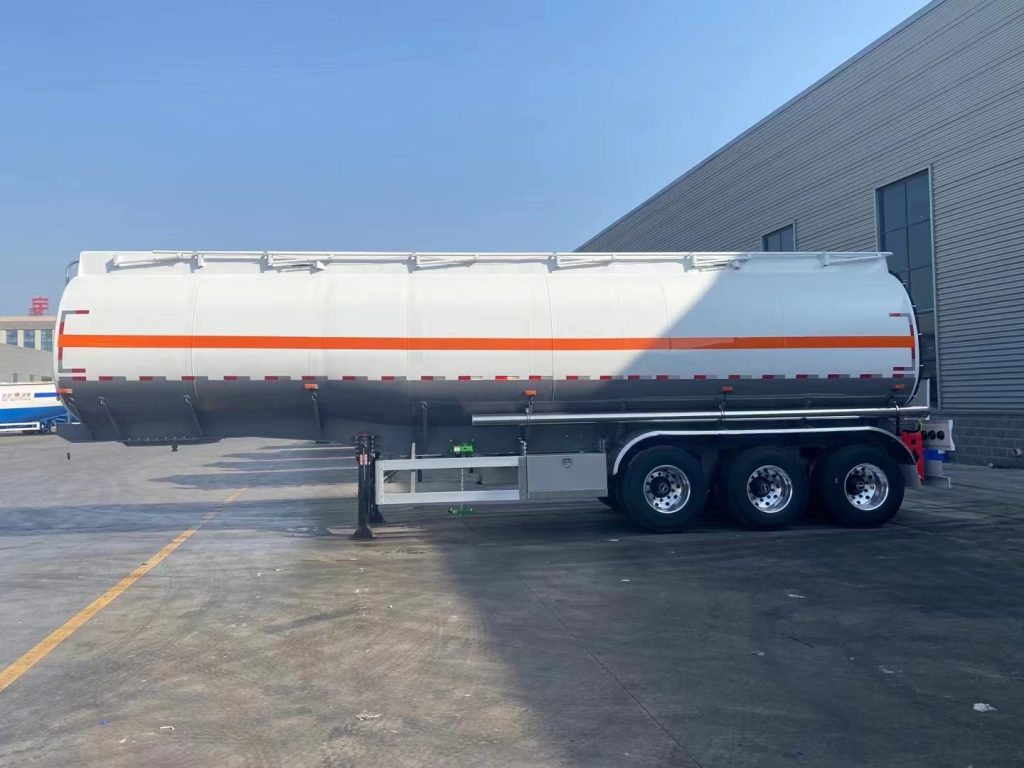
LUEN Steel Fuel Tanker
Even the best fuel tanker unloading systems and equipment cannot ensure safety without properly trained personnel. Training is not a one-time event but an ongoing process.
Training Programs
Regulations require each employee engaged in cargo tank loading or unloading operations to receive training and be evaluated on their qualifications to perform these functions. This is not merely a suggestion – it is a legal requirement in most jurisdictions.
Personnel must receive training on the specific hazards of chemicals handled, safe transfer procedures, emergency response actions, and proper use of personal protective equipment. Training should include both classroom instruction and hands-on practice under supervision.
Regular refresher courses keep skills current as equipment and procedures change. Technology evolves, regulations update, and new hazards are identified. Training programs must keep pace with these changes.
Competency assessments ensure workers can handle both routine operations and emergency situations. Written tests alone are not sufficient – workers must demonstrate practical ability to perform tasks safely under supervision before working independently.
Only drivers trained by an authorized instructor should perform loading operations. This requirement exists because the consequences of errors during fuel transfer can be catastrophic.
SOPs, Checklists, and Records
The use of formalized and documented procedures, safety checklists, and additional training significantly reduces loading and unloading errors. These tools provide structure and ensure that critical steps are not forgotten during busy operations.
Pre-job checklists verify that all equipment is ready and all safety systems are working before transfer begins. During-operation checklists help workers stay focused on critical steps and maintain awareness throughout the process.
Post-job documentation records what was transferred, how much, any issues that occurred, and any equipment problems noted. These records support inventory tracking, regulatory compliance, and continuous improvement efforts.
Digital systems can automate much of this documentation, reducing paperwork burden while improving accuracy and traceability. That being said, paper backup systems should be available in case electronic systems fail.
Continuous Improvement
Learn from near-misses and incidents to prevent future problems. Post-incident reviews identify what went wrong and how procedures or equipment can be improved to prevent recurrence.
Update procedures when new equipment is installed or regulations change. Do not assume that old procedures will work with new equipment – verify compatibility and modify procedures as needed.
Regular audits check that people follow procedures correctly in actual practice, not just during training. Formal recorded inspection, testing, and maintenance activities should be completed for all items in the process, including the vehicle.
Share lessons learned across your organization to improve safety everywhere. An incident at one location may reveal a hazard that exists at other facilities as well.
Practical Tools and Reference Materials
Having the right tools and references readily available makes it easier for workers to follow procedures correctly.
Checklists and Templates
Standardized checklists ensure nothing gets missed during fuel unloading operations. Pre-operation checklists verify vehicle condition, grounding connections, and cargo compatibility before any product flows.
Operation checklists guide workers through each step safely, providing reminders of critical actions and verification points. Post-operation checklists ensure proper shutdown and disconnection.
Equipment inspection sheets track maintenance and identify problems before they cause failures. Catching a worn hose or faulty valve during routine inspection is far better than discovering it during an emergency.
Incident reporting templates help document issues clearly for investigation and regulatory reporting. Good documentation of near-misses helps identify patterns and prevent future incidents.
Equipment Integration Guidance
Unloading pump skids consist mainly of pumps with motors, strainers, unloading arms or hoses, flow meters, recirculation line valves, relief valves, and other associated valves along with piping and electrical components. All components must work together as an integrated system, not as isolated pieces of equipment.
Select grounding systems that monitor connections continuously throughout operations. Choose vapor recovery units sized appropriately for your flow rates and vapor generation. Install leak detection systems that can trigger automatic shutoffs before small leaks become major spills.
Maintain all equipment according to manufacturer recommendations. Deferred maintenance on fuel transfer equipment is a recipe for disaster. The cost of proper maintenance is trivial compared to the cost of a major incident.
Compliance References
Tanker truck loading and unloading systems must meet workplace safety standards and industry best practices. These standards cover everything from equipment design to training requirements to emergency response procedures.
Stay current with regulations applicable to your operations. Environmental rules may require vapor recovery systems. Transportation rules govern how fuel must be handled, labeled, and documented. Workplace safety rules protect employees during transfer operations.
Moreover, industry standards often go beyond minimum regulatory requirements, representing best practices developed through decades of experience. Following these standards demonstrates commitment to safety and can provide legal protection in case of incidents.
Conclusion
Loading and unloading tanker trucks can be incredibly dangerous without the proper equipment and safety solutions. Safe and efficient fuel tanker unloading systems depend on three pillars: proper equipment, trained personnel, and disciplined procedures. Remove any one of these pillars and the entire structure becomes unstable.
Modern tanker unloading systems integrate multiple safety features including grounding protection, vapor recovery, leak detection, and overfill prevention. Bottom loading with closed-system designs offers the best combination of safety and environmental protection, which is why it has become the industry standard for new installations.
Selecting quality fuel tanker trailers forms the foundation of safe fuel transport operations. LUEN fuel tanker trailers combine advanced manufacturing with reliable safety features, offering various configurations from 36,000 to 85,000 liters in aluminum alloy, stainless steel, and carbon steel materials. With ISO9001, DOT, CE, and GCC certifications, LUEN provides professional solutions for fuel transportation needs across global markets including Africa, Southeast Asia, the Middle East, and South America.
That being said, fuel tanker unloading equipment continues to evolve with better automation and monitoring. However, technology alone cannot ensure safety. Well-trained operators who follow established procedures remain essential. The most sophisticated safety system in the world is useless if workers do not use it properly or if they take shortcuts under pressure.
Regular inspections, maintenance, and continuous improvement efforts keep fuel unloading operations running safely day after day. This requires commitment from management to provide resources, commitment from workers to follow procedures, and commitment from everyone to speak up when they see unsafe conditions.
By implementing integrated fuel unloading systems with proper controls and training, companies protect workers, prevent environmental damage, and ensure reliable fuel distribution. The investment in proper equipment and procedures pays off through reduced incidents, lower insurance costs, improved regulatory compliance, and most importantly, workers who go home safely to their families every day.