English
 Spanish
 French

Full Trailer vs Semi Trailer: Expert Comparison Guide 2025
If you’re trying to wrap your head around the difference between a semi trailer and a full trailer, you’re not alone! Whether you’re in transportation, logistics, or just curious about those massive trucks cruising down the highway, we’ve got you covered. This article will break down the key distinctions between semi-trailers and full trailers, including their unique features, in a way that actually makes sense. We’ll walk you through their structural differences, how they connect to trucks, load distribution, and where you’d actually use each type for specific transportation requirements. By the time you’re done reading, You will know exactly what role each type of trailer plays in transportation, and why semi trailers dominate long-haul freight while full trailers shine in short-distance and specialized applications.
What Is a Full Trailer(Drawbar Trailer)?

What Is a Full Trailer(Drawbar Trailer)? Think of a full trailer (drawbar trailer)as the independent type – it’s got both front and rear axles, which means it can support its entire weight without leaning on anyone else. When you attach a full trailer to your towing vehicle (whether that’s a truck or tractor) at the attachment point, you’re using a drawbar or tow bar to make the connection. Here’s the thing: the towing vehicle just pulls the trailer along for the ride, but it doesn’t actually carry any of the trailer’s weight. That’s why when people talk about a full trailer truck, they’re referring to the whole setup – truck plus trailer working together.
Here’s what makes a full trailer tick:
- Front and rear axles that do all the heavy lifting, ensuring even weight distribution.
- Can stand on its own two feet (or should we say, all its wheels)
- Uses a drawbar connection system
- The truck pulling it doesn’t bear any of the trailer’s weight
You’ll typically see full trailers being put to work in:
- Short-distance hauling jobs
- Farms, construction sites, and busy docks
- Situations where you need rock-solid stability and the ability to park independently
What Is a Semi Trailer?

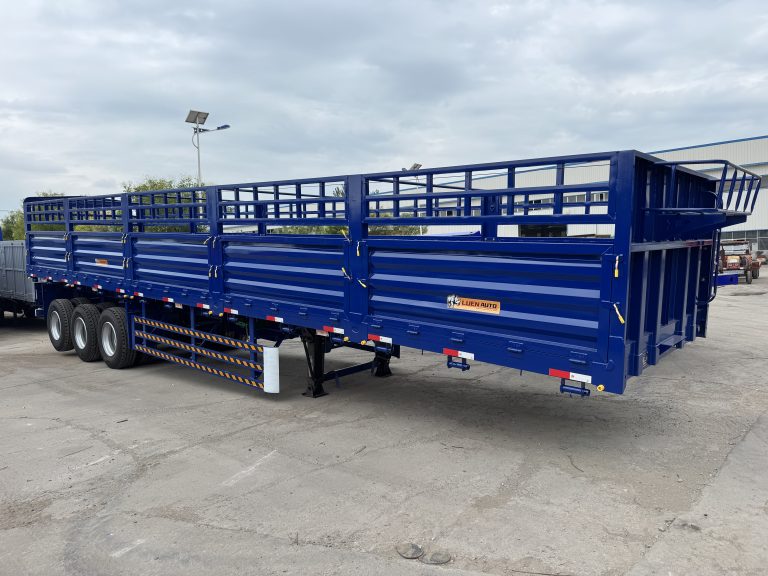
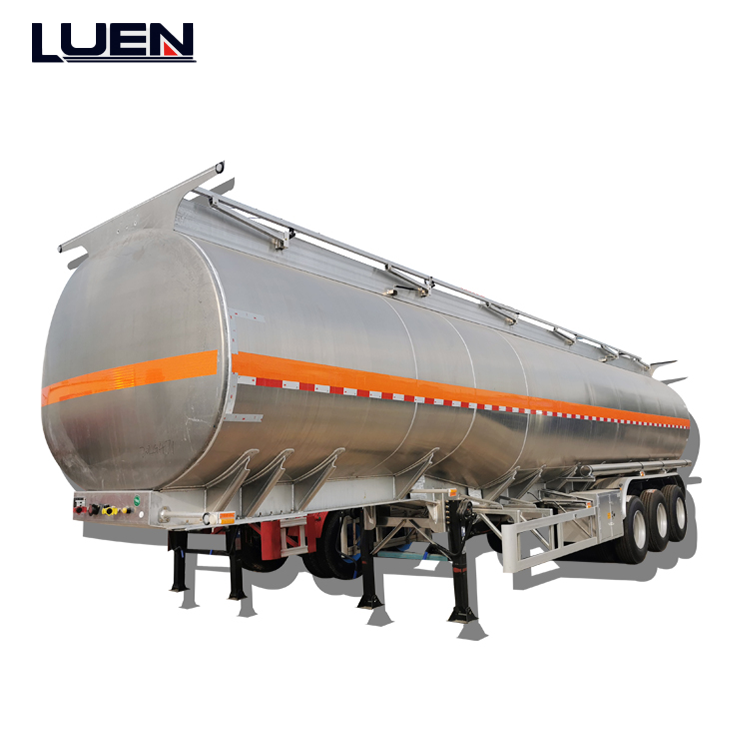
Now, a semi trailer is a whole different animal. The big difference? It doesn’t have a front axle at all. Instead, the front end of the semi trailer actually rests right on the tractor unit (that’s the truck doing the pulling), which means the truck ends up supporting part of the trailer’s weight along with the wheels of the tractor. This is exactly why it’s called a “semi” trailer – because only part of its trailer’s weight is supported by its own wheels, while the rest gets a piggyback ride on the truck.
What makes a semi trailer unique:
- No front axle – just rear axles doing the work
- Front end takes a rest on the tractor unit
- Connected through a kingpin and fifth wheel system
- Needs those handy landing gear “legs” to stand alone when the truck’s not around
You’ll find semi trailers being the workhorses for:
- Long-haul freight and highway transport
- Logistics and delivery runs across long distances
- Hauling those big, heavy, or specialized loads that need some serious muscle
Semi Trailer vs Full Trailer: Key Differences
1. Connection and Load Distribution
Full trailer: Picture this – it’s connected to your towing vehicle with a drawbar, and all that weight stays right where it belongs, on the trailer’s own axles. The truck’s job is simple: just pull. It doesn’t have to worry about carrying any of the trailer’s load.
Semi trailer: This one’s got a more intimate relationship with the tractor unit. They’re connected by a king pin and fifth wheel system, ensuring a stable and secure connection, and here’s where it gets interesting – the tractor actually supports part of the trailer’s weight. This tag-team approach makes the whole setup incredibly efficient for heavy loads and those marathon long-distance hauls.
2. Structure and Components
Full trailer: It’s got the full package – front and rear axles, a drawbar, and sometimes even steering on the front axle. The beauty of this design is that it can stand alone and park independently, providing optimal stability as a self-sufficient member of the trailer family.
Semi trailer: This one’s more of a team player. It only has rear axles, with the front getting support from either the tractor or those landing gear legs, also referred to as a front support device, when it’s time to park. All the steering action happens up front with the tractor unit – the trailer just goes along for the ride, utilizing air brakes for enhanced safety during operation.
3. Maneuverability and Parking
Here’s where semi trailers really shine. They’re much easier to reverse and have a smaller turning circle because there’s only one turning point – that fifth wheel connection. This makes them absolute champions in tight spaces and city driving where every inch counts.
Full trailers, on the other hand, can be a bit more challenging to handle because drivers must pay close attention to the swing range at the rear of the vehicle. They’ve got two pivot points (the drawbar and the trailer axles), which gives them a larger turning radius and makes reversing more of an art form. But here’s the trade-off – they’re more stable overall and can park without needing a truck babysitter.
4. Size, Weight, and Capacity
When it comes to size and capacity, semi trailers, including cargo trailers, are the heavy hitters. These workhorses typically measure 48 to 53 feet long and 8.5 feet wide. In the U.S., a fully loaded semi trailer can legally tip the scales at up to 80,000 pounds (that’s about 36,300 kg of serious hauling power).
Full trailers tend to be more compact, usually clocking in around 40 feet long, and they’re typically used for lighter or more specialized loads. The average size of a trailer in this category can range anywhere from 8 to 32 feet in length and 5 to 8.5 feet in width, making them perfect for jobs that don’t require the massive capacity of their semi cousins.
5. Usage Scenarios
Full trailers are your go-to choice for short-haul jobs, multi-stop deliveries, and places where you need the flexibility of independent parking. Think farms, construction sites, or anywhere you need to drop off the trailer and come back for it later.
Semi trailers are the undisputed champions of highway freight and long-distance transport, designed to handle a wide range of cargo types and withstand various weather conditions. When you need maximum payload efficiency and you’re covering serious miles, these are the trailers that get the job done. They’re the backbone of logistics, shipping, and moving massive amounts of goods across the country.
How Much Do Semis Weigh?
This is one of those questions that comes up a lot, and the answer depends on what you’re measuring:
- The semi trailer itself (completely empty) usually weighs between 3,000 to 14,000 pounds (about 1,400 to 6,400 kg), depending on what type you’re dealing with and what materials it’s made from.
- The tractor unit (that’s the truck part) weighs in at 10,000 to 25,000 pounds (about 4,500 to 11,300 kg) when it’s not pulling anything.
- Put them together empty, and you’re looking at a semi truck and trailer combo that weighs 30,000 to 35,000 pounds (about 13,600 to 15,900 kg).
- Fully loaded and ready for business, a semi trailer truck can legally weigh up to 80,000 pounds (about 36,300 kg) in the U.S.
Average Size of a Trailer
Semi trailers: The most common lengths you’ll see are 48 to 53 feet, with a standard width of 8.5 feet and height around 13.5 feet. In addition, the length of the tractor unit will be longer, so it is important to clearly know the semi truck and trailer length during actual use. Of course, specialized trailers like flatbeds or those refrigerated units (reefers) might have different dimensions depending on what they’re designed to haul.
Full trailers and utility trailers: These range from 8 to 32 feet in length and 5 to 8.5 feet in width. They’re often the perfect size for smaller loads or those special-purpose jobs that don’t require the massive capacity of a semi.
Advantages and Disadvantages Table
| Feature | Semi Trailer | Full Trailer |
|---|---|---|
| Load Bearing | Trailer supports its own weight and has a higher load capacity | Trailer supports its own weight |
| Maneuverability | High; small turning radius, easy reversing | Lower; large turning radius, harder to reverse |
| Stability | Depends on tractor; needs coupling | Very stable; can stand alone |
| Typical Use | Long-haul, highway, logistics | Short-haul, farms, construction, docks |
| Maintenance | More complex; higher cost | Simpler; lower cost |
| Average Size | 48-53 ft long, 8.5 ft wide | 8-32 ft long, 5-8.5 ft wide |
| Weight (loaded) | Up to 80,000 lbs (36,300 kg) | Usually less than 40,000 lbs (18,100 kg) |
When to Choose a Semi Trailer vs Full Trailer
Go with a semi trailer if you’re planning to move heavy goods over long distances, especially on highways. They’re absolutely perfect for logistics companies, shipping operations, and any situation where transporting perishable goods and being able to turn and back up in tight spaces is crucial to getting the job done.
Choose a full trailer if stability, independent parking, or working in specialized environments like farms, construction sites, or busy docks is your priority. They’re much easier to park and can stand on their own, but keep in mind they’re less maneuverable and typically handle lighter loads.
Conclusion
When it comes down to it, the main difference between a semi trailer and a full trailer is all about how they connect to the towing vehicle and how they handle their load, including heavy machinery. Semi trailers have become the go-to choice for long-haul freight because they’re easier to maneuver, can handle heavier loads, and are simply more efficient in terms of fuel efficiency for highway travel. Full trailers earn their keep on shorter distances and jobs that demand stability and the ability to park independently.
Understanding these differences in structure, connection methods, load distribution, and typical applications will help you make the right choice for your specific needs. Whether you’re curious about the average size of a trailer, want to know how much semis weigh, or you’re doing a detailed semi trailer vs full trailer comparison, this guide gives you the real-world information you need to make a smart decision.
If you’re looking for high-quality trailers that deliver reliable performance, consider LUEN – a leading Chinese trailer manufacturer specializing in the production and export of premium semi-trailers and full trailers. With their expertise in manufacturing both types of trailers, LUEN understands the importance of quality construction and reliable design, whether you need the long-haul efficiency of a semi trailer or the independent stability of a full trailer. Their commitment to producing export-quality trailers makes them a trusted choice for businesses looking to invest in durable, well-engineered transportation solutions.v