
 English
 Spanish
 French

Comprehensive Guide to Tanker Trailers and Semi Truck Fuel Capacities

If you’ve ever wondered about those massive tanker trailers cruising down the highway or found yourself curious about how much fuel those big rigs actually hold, you’re in the right place! Tanker trailers are the unsung heroes of our economy – these specialized vehicles transport everything from the gas in your car to the milk in your refrigerator. And let’s be honest, understanding how many gallons of gas does a semi hold isn’t just industry knowledge anymore; it’s pretty fascinating stuff that affects all of us.
This guide will walk you through everything you need to know about tanker trailers and semi truck fuel capacities. Whether you’re a driver, fleet manager, or just someone who’s genuinely curious about these mechanical marvels, we’ve got you covered.
Introduction
Here’s the thing – tanker trailers aren’t just big metal cylinders on wheels. They’re sophisticated pieces of equipment designed to safely transport liquids like fuel, chemicals, food-grade products, and water, plus dry bulk materials such as cement and flour. Each type of tanker is basically custom-built for its specific cargo, which makes perfect sense when you think about it.
But here’s what many people don’t realize: the semi trucks that pull these massive trailers need serious fuel capacity to cover those long-haul distances. Questions like ‘how many gallons does a semi truck hold’ or ‘how big are fuel tanks on semi trucks’ aren’t just technical curiosities – they’re critical for route planning, weight management, and keeping operations profitable for truck drivers. Trust me, when you’re managing a fleet or planning a cross-country haul, knowing exactly the amount of fuel a semi holds can make or break your schedule.
Tanker Trailer Basics: Designs and Materials
Let’s start with the fundamentals. Tanker trailers are typically constructed from materials like carbon steel, stainless steel, aluminum, and fiberglass reinforced plastic. The choice isn’t random – it all comes down to what they’re carrying and the conditions they’ll face on the road.
Now, here’s where it gets interesting. There are three main tanker designs, and each one serves a specific purpose:
Baffles: Think of these as strategic speed bumps for liquids. These angled dividers have holes that slow down liquid movement inside the tank, which significantly reduces that dangerous sloshing effect. Anyone who’s driven with a partially filled water tank in their pickup knows how unsettling that liquid movement can be – now imagine that times a thousand!
Bulkheads: These are solid compartments that essentially turn one big tank into multiple smaller sections. Pretty clever, right? This design allows truckers to transport different liquids simultaneously while keeping liquid movement to a minimum. It’s like having multiple tanks in one trailer.
Smoothbores: These feature a single, smooth compartment that’s much easier to clean and sanitize. The downside? Liquids can move around freely, which can definitely affect driving stability. It’s a trade-off between convenience and control.
The design choice impacts everything from safety protocols to cleaning procedures, and ultimately determines what types of cargo can be transported safely.
Tanker Trailer Sizes and Capacities
Size really does matter when it comes to tanker trailers. These workhorses come in various standardized sizes, each designed to optimize payload while complying with weight regulations and transportation requirements.
Standard Capacity Classifications:
Small Tankers (1,000-3,000 gallons): Primarily used for local delivery and distribution. These compact units are perfect for urban areas with tight spaces and weight restrictions. Common lengths range from 20-35 feet, making them ideal for fuel stations, small-scale chemical deliveries, and residential propane services.
Medium Tankers (3,000-6,000 gallons): The most versatile size category, typically measuring 35-45 feet in length. These trailers strike the perfect balance between capacity and maneuverability, making them popular for regional distribution and mid-range transportation needs.
Large Tankers (6,000-9,000 gallons): Built for efficiency over long distances, these 45-53 foot trailers maximize payload while staying within legal weight limits. They’re the backbone of interstate fuel distribution and bulk liquid transport.
Extra-Large Tankers (9,000-11,600 gallons): The giants of the industry, reaching up to 53 feet in length with specialized multi-compartment designs. These are reserved for specific applications where maximum capacity is essential, such as cross-country petroleum transport.
Capacity Considerations by Application:
Fuel tankers typically range from 5,500 to 11,600 gallons and feature multiple compartments (usually 4-6) to carry different fuel types simultaneously. The standard DOT-406 fuel trailer holds approximately 9,000-11,600 gallons with compartment sizes varying from 1,500 to 2,500 gallons each.
Food-grade tankers generally have capacities between 4,000-6,500 gallons due to the higher density of liquids like milk and juices. These often require special insulation and temperature control systems, which can reduce overall capacity but ensure product quality during transport.
Chemical tankers vary widely in size (2,000-6,000 gallons) based on the specific chemicals being transported. Hazardous materials often have strict weight limitations, so smaller capacities with reinforced stainless steel construction are common for safety compliance.
Water tankers range from 2,000 gallons for construction sites up to 9,000 gallons for agricultural irrigation and firefighting applications. The simple design allows for maximum capacity utilization within weight constraints.
Dry bulk tankers typically hold 1,000-1,600 cubic feet (equivalent to approximately 25-40 tons of material), using pneumatic unloading systems powered by compressed air. These specialized trailers prioritize volume over liquid capacity measurements.
The size you ultimately need depends on payload weight, legal axle limits, route restrictions, and operational efficiency requirements. Understanding these capacity specifications, along with the specific tanker trailer type required for your application, ensures you select the right equipment for optimal performance and regulatory compliance.
Semi Truck Fuel Tank Capacity: How Much Fuel Does a Semi Truck Hold?
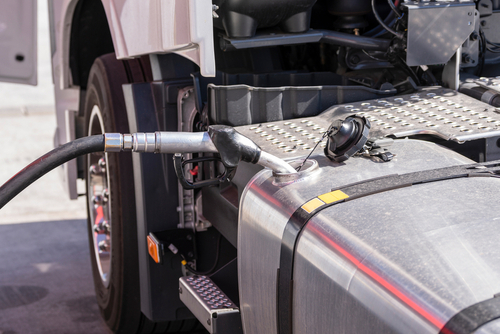
Now here’s where things get really interesting, and it’s information that directly impacts anyone involved in trucking operations. When people ask “how many gallons of gas does a semi hold,” they’re usually surprised by the answer.
Most semi trucks are equipped with two fuel tanks, and each one typically holds between 120 and 150 gallons. According to the Federal Motor Carrier Safety Administration, do the math, and you’ll find that, as a matter of fact, a semi truck can hold up to 300 gallons of diesel fuel in total. That’s enough fuel to fill up about 15 regular passenger cars!
Here are the key details about semi truck fuel tank capacity:
The typical tank size ranges from 120-150 gallons per tank, which means the total capacity can reach up to 300 gallons with dual tanks. Some trucks have custom tanks that are even larger – we’re talking anywhere from 160 gallons up to 400 gallons for those really long hauls where fuel stops are few and far between.
But here’s something most people don’t consider: fuel weight. Diesel weighs about 7 pounds per gallon, so a full 300-gallon fuel load adds roughly 2,100 pounds to the truck’s overall weight. That’s more than a small car!
There are also some practical filling rules that experienced drivers swear by. Most drivers fill their tanks to about 95% capacity to allow for fuel expansion and prevent messy spills. They also try to avoid letting fuel levels drop below 25% because that’s when you start risking contamination from sediment that settles at the bottom of the tank.
Understanding the semi truck gas tank size helps drivers estimate their travel range before needing to refuel. On average, semi trucks achieve about 6.5 miles per gallon (yeah, fuel efficiency isn’t their strong suit), so a full 300-gallon tank can theoretically cover approximately 2,000 miles. Of course, real-world conditions like terrain, weather, and cargo weight can significantly impact these numbers.
How Fuel Capacity Impacts Trucking Operations
Fuel capacity isn’t just a number – it directly influences how efficiently trucking operations run and whether they stay compliant with regulations. It’s a delicate balancing act that fleet managers deal with every single day.
Larger fuel tanks definitely allow for longer distances without stopping, which sounds great in theory. But here’s the catch: they also add significant weight, which can reduce how much cargo you can legally carry. Fleet managers constantly have to balance fuel load with cargo weight to stay within Department of Transportation (DOT) limits, and trust me, those violations come with hefty fines.
Proper fuel management isn’t just about avoiding penalties – it reduces costly downtime and improves route planning efficiency. When you know exactly how big are fuel tanks on semi trucks and understand their fuel capacity, especially when considering the efficiency of a diesel engine, you can optimize operational costs and keep those wheels turning profitably.
Types of Tanker Trailers by Industry and Cargo
Let’s dive deeper into the different types of tanker trailers you’ll encounter on the roads:
Fuel Tankers These are designed specifically to transport flammable liquids like gasoline and diesel. Safety is absolutely paramount here, so they’re built with specialized features like grounding equipment and compartments designed to prevent static electricity buildup. One spark in the wrong place, and you’ve got a serious problem on your hands.
Food-Grade Tankers These handle consumables like milk, juices, and edible oils. Many of these trailers have insulation and temperature control systems because maintaining product quality from point A to point B is crucial. Nobody wants to explain why the milk delivery arrived spoiled!
Water Tankers While they might seem straightforward, water tankers serve diverse industries including agriculture, firefighting, and construction. Their design is usually simpler than other tanker types, but they come in various sizes depending on specific needs.
Chemical Tankers These are the heavy-duty champions, constructed from stainless steel or other corrosion-resistant materials. They’re specifically engineered to handle hazardous chemicals safely, with multiple backup systems and safety features.
Dry Bulk Tankers Also known as pneumatic tankers, these transport dry goods like flour and cement. They use compressed air to unload materials efficiently, which is both faster and requires less manual labor than traditional methods.
Regulatory Compliance and Safety Considerations
Operating tanker trailers and semi trucks isn’t something you can just jump into – there are serious regulations to follow. Drivers must have appropriate endorsements on their Commercial Driver’s License (CDL) to transport hazardous materials, and the training for these endorsements is pretty intensive.
Weight limits are another critical factor, and they consider both cargo and fuel weight. Knowing exactly how much fuel does a semi hold helps avoid costly violations and keeps operations running smoothly. Safety protocols include proper filling procedures, regular tank maintenance, and emergency response readiness – because when you’re dealing with potentially hazardous materials, there’s no room for shortcuts.
Services and Support for Tanker and Semi Truck Operations
The tanker trailer industry is supported by numerous companies that offer sales of both new and used equipment, plus comprehensive repair and maintenance services. These services are essential for keeping equipment safe, compliant, and operating efficiently.
Many operations also rely on truck fleet fuel delivery services that provide bulk fuel directly to their facilities when and where it’s needed. This can be a game-changer for fleet efficiency, especially for operations with a fleet of semi trucks and predictable fueling schedules.
Conclusion
Tanker trailers really are more complex and fascinating than they might appear at first glance. They come in numerous designs and sizes, with each type specifically suited to particular cargo types and industries. Understanding the construction materials, compartment designs, and capacities is absolutely essential for safe and efficient transport operations.
Equally important is understanding semi truck fuel capacity – typically between 240 and 300 gallons – because this knowledge directly impacts travel range planning, weight management, and operational efficiency related to the gross vehicle weight. When you combine knowledge of tanker trailers with a solid understanding of the fuel tank capacities of trucks, including how many gallons do semi trucks hold, you’re equipped to optimize logistics, maintain regulatory compliance, and ensure safety on the road.
Whether you’re just starting in the industry or you’re a seasoned professional, understanding these fundamentals will serve you well. After all, these vehicles and the people who operate them keep our economy moving – literally!


