English
 Spanish
 French

Your Complete Guide to Different Types of Tanker Trailers
Ever wondered how your morning coffee gets from farm to cup, or how fuel reaches your local gas station? The answer often involves those massive, shiny cylindrical fuel tank trailers that transport petroleum products you see cruising down highways – tanker trailers! These workhorses of the transportation industry are far more sophisticated than they might appear at first glance, and understanding the different types of fuel tank trailers can make all the difference in choosing the right equipment for your business needs.

Getting to Know Tanker Trailers
Think of tanker trailers, including gas tankers, as the unsung heroes of our daily lives. These specialized trailers are engineered to safely transport everything from the milk in your cereal to the gasoline in your car, and even the dangerous goods and chemicals that help manufacture countless products we use every day. The beauty of tanker trailers lies in their ability to move large volumes of liquids or dry materials without contamination, spillage, or damage – pretty impressive when you consider the physics involved!
What makes choosing the right tanker trailer so important? Well, it’s not a one-size-fits-all situation. Different types of tanker trailers are essential equipment designed for specific purposes, and matching the right trailer to your cargo can mean the difference between a smooth operation and a costly headache.
The Three Main Tanker Trailer Types: Understanding the Basics
Here’s where things get interesting! The internal design of tanker trailers directly impacts how your cargo behaves during transport, and there are three main types of tanker trucks you’ll encounter:
Smooth Bore Tankers: The Clean Slate Option
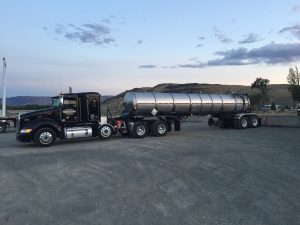
Picture a giant straw – that’s essentially what a smooth bore tanker looks like inside. These tanker trailers feature one long, uninterrupted interior compartment without any internal barriers.
Why you’ll love them: If cleanliness is next to godliness, then smooth bore tankers are practically saints! They’re incredibly easy to clean and sanitize, making them the go-to choice for food-grade liquids like milk, juice, or cooking oils. No nooks and crannies means no hiding spots for contaminants.
The trade-off: Here’s the catch – liquids can slosh around freely inside, especially when your tanker is only partially filled. This “liquid surge” can feel like trying to carry a half-full fishbowl while walking – it affects stability and can make handling tricky for drivers.
Perfect for: Single liquid loads where cross-contamination is absolutely not an option.
Bulkhead Tankers: The Multi-Tasker’s Dream
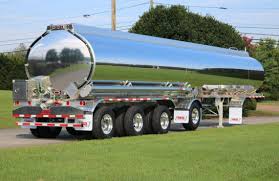
Think of bulkhead tankers as apartments for liquids – they contain solid internal walls that create separate “rooms” or compartments within the tank.
The advantages are clear: Want to transport different types of fuel in one trip? No problem! These types of tank trailers prevent mixing of different liquids and significantly reduce that troublesome front-to-back liquid movement we mentioned earlier.
What to watch for: While they solve the front-to-back sloshing issue, side-to-side movement can still occur. It’s like having a partially filled water bottle lying on its side – the liquid still wants to move around.
Industry favorite: Petroleum transport companies love these because they can deliver multiple fuel types in a single trip, maximizing efficiency.
Baffled Tankers: The Best of Both Worlds
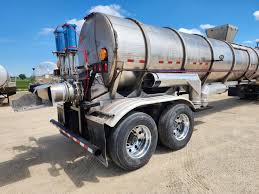
Baffled tankers are the Goldilocks solution – not too restrictive, not too loose, but just right! They feature perforated internal walls (called dividers or baffles) that slow down liquid movement in all directions without completely separating the cargo.
Why they work so well: These types of tanker trailers provide a smart balance between the easy cleaning of smooth bore designs and the stability benefits of bulkhead systems, which are a specific type of trailer. The perforations allow some liquid flow while still controlling that dangerous liquid surge.
Popular applications: Chemical and fuel transport companies often choose baffled designs to reduce rollover risk while maintaining operational flexibility.
Materials That Make the Difference
Just like choosing the right tool for a job, selecting the proper material for your tanker trailer is crucial. Here’s what you need to know:
Carbon Steel: The heavy-duty champion, perfect for tough jobs like transporting asphalt or handling high-pressure applications. Think of it as the pickup truck of tanker materials – strong, reliable, and built to last.
Stainless Steel: The clean freak’s favorite! Corrosion-resistant and sanitary, it’s ideal for food-grade tankers and chemical applications where purity matters, such as grain alcohol.
Aluminum: The efficiency expert – lighter weight means better fuel economy, which is why you’ll often see aluminum tanker trailers hauling fuel across long distances.
Related: Aluminum vs. Stainless Steel Oil Haulers: A Comprehensive Comparison
Fiberglass Reinforced Plastic (FRP): The specialist, designed for handling corrosive chemicals that would eat through other materials for breakfast.
Shape Matters: Tanker Trailer Configurations
You might think all tanker trailers look the same, but their shapes are actually carefully engineered for specific purposes:
| Shape | What It Looks Like | Best For |
|---|---|---|
| Double Taper | Narrow at both ends, wide in the middle (like a football) | Thick liquids like lubricants that need help flowing |
| Straight Bottom | Flat-bottomed (like a traditional tank) | Thin liquids like gasoline and diesel |
| Troughed | Rounded bottom (like a pipe cut in half) | Fast-flowing liquids that need quick unloading |
The number of compartments can range from 1 to 6, and here’s the thing – more compartments mean better organization but less space per section. It’s all about finding that sweet spot for your specific needs.
Semi Tanker Capacity: Size Does Matter
When it comes to semi tanker capacity, variety is the name of the game:
Small tankers, with a maximum capacity of 1,000 to 3,000 gallons, are the local delivery champions – perfect for bringing fuel to airports or delivering propane to homes and businesses. They’re nimble and efficient for shorter routes.
Medium to large tankers (5,000 to 11,600 gallons) are the long-haul heroes, built for covering serious distances and delivering cargo in bulk. These are the ones you’ll see crossing state lines day and night.
Specialized giants can hold up to 20,000 gallons for specific applications – though at that size, you’re looking at some serious logistics considerations!
Don’t forget about dry bulk tankers – they measure capacity in cubic feet (typically 500 to 5,500 cubic feet) because they’re designed for powders and granules rather than liquids.
Here’s a pro tip: remember that 1,000 gallons of milk weighs very differently than 1,000 gallons of gasoline, so capacity planning isn’t just about volume – density and legal weight limits matter too!
Types of Tanker Trailers: Finding Your Perfect Match
Petroleum & Gas Tank Trailers: The Fuel Runners
These are the tanker trailers you probably see most often, and for good reason – they keep our world moving! They transport everything from the gasoline in your car to the jet fuel that powers aircraft.
What makes them special: Multiple compartments and specialized shapes optimize unloading and vapor recovery. Plus, they’re built to meet incredibly strict safety standards because, well, they’re carrying some pretty flammable stuff!
Food Grade Tankers: The Clean Team
These types of tanker trucks are the perfectionists of the industry. Made from stainless steel with smooth bore interiors, they’re designed for easy cleaning and sanitation.
Cool features: Many include insulation or temperature control systems – because nobody wants warm milk or frozen cooking oil arriving at their destination!
Water Tankers: The Versatile Workhorses
From fighting fires to irrigating crops, water tankers are incredibly versatile. Their designs are often refreshingly simple – focused on volume rather than fancy compartmentalization.
Applications galore: Agriculture, firefighting, construction, municipal services – if there’s a need for water transport, these tanker trailers are ready to roll.
Chemical Tankers: The Safety-First Specialists
These are the most carefully engineered types of tank trailers, designed to handle corrosive, flammable, or toxic materials that could spell serious trouble if not handled properly.
Built tough: Constructed with stainless steel or FRP, meeting strict DOT-407 or DOT-412 codes, and equipped with safety valves, pressure relief systems, and sometimes insulation for temperature-sensitive chemicals.
Dry Bulk Tankers (Pneumatic Tankers): The Powder Movers
These clever tanker trailers use compressed air to unload cargo through bottom hoppers – imagine a giant version of those pneumatic tubes at bank drive-throughs!
What they carry: Everything from cement and flour to sand and plastic pellets. Their capacity is measured in cubic feet instead of gallons because, well, you can’t measure sand in gallons!
Asphalt and Hot Oil Tankers: The Heat Keepers
These specialized tanker trailer types are basically mobile ovens, keeping materials like asphalt liquid during transport with insulation and heating devices.
Safety First: Staying Compliant and Protected
Let’s talk safety – because when you’re dealing with thousands of gallons of potentially hazardous materials, there’s no room for cutting corners.
Driver requirements: Anyone operating tanker trailers with loads over 1,000 gallons needs a Commercial Driver’s License (CDL) with tanker endorsements. It’s not just paperwork – it’s specialized driver training that could save lives.
Engineering for safety: Modern tanker trailers are designed with low centers of gravity, strategic bulkheads, and baffles to reduce rollover risk. Some even include electronic stability control (ESC) systems – like having a co-pilot that never gets tired!
Emergency preparedness: Safety valves and rollover protection devices help contain liquids during accidents, potentially preventing spills or explosions that could be catastrophic.
Regulatory compliance: FMCSA and EPA regulations aren’t suggestions – they’re mandatory requirements that protect both the environment and public safety.
Making the Right Choice: Your Tanker Trailer Selection Guide
Choosing among the different types of tanker trailers doesn’t have to feel overwhelming. Here’s your practical checklist:
Start with your cargo: What type of cargo are you transporting? Food-grade liquids, hazardous chemicals, fuel, or dry materials? This alone will narrow down your options significantly.
Consider capacity needs: How much do you need to carry, and what are the legal weight limits in your operating areas?
Think about special requirements: Do you need temperature control? Insulation? Special loading mechanisms?
Factor in safety features: What compliance standards do you need to meet? What safety features are non-negotiable for your operation?
Consider your routes: Are you making local deliveries or cross-country hauls? The distance and terrain matter when choosing tanker trailer types.
The Bottom Line
Understanding the world of tanker trailers might seem complex at first, but it really comes down to matching the right tool to the job, especially in the freight industry. Whether you need a smooth bore tanker for pristine food-grade transport, a bulkhead tanker for efficient loading and multi-product petroleum delivery, or a specialized chemical tanker for hazardous materials, the key is understanding how each type serves specific needs.
Remember, semi tanker capacity, materials, and safety features aren’t just technical specifications – they’re the foundation of successful, profitable, and safe operations that cater to specific transport needs. Take the time to understand your options, consult with experts, and choose tanker trailers that not only meet your current needs but can adapt as your business grows.
After all, in the world of liquid transport, the right tanker trailer isn’t just equipment – it’s your partner in keeping the economy flowing smoothly, one gallon at a time!