
 English
 Spanish
 French

What is a Drawbar Trailer? A Detailed Explanation
A drawbar trailer is a type of trailer widely used in transportation and logistics, known for its unique design and towing mechanism, particularly in the field of machinery. Understanding what a drawbar trailer is, how it works, and its key components will help anyone involved in hauling or interested in trailer technology. This article explains the concept clearly and simply, focusing on the role of the drawbar on a trailer, the types of drawbar trailers, and their practical uses.
What is a drawbar trailer?
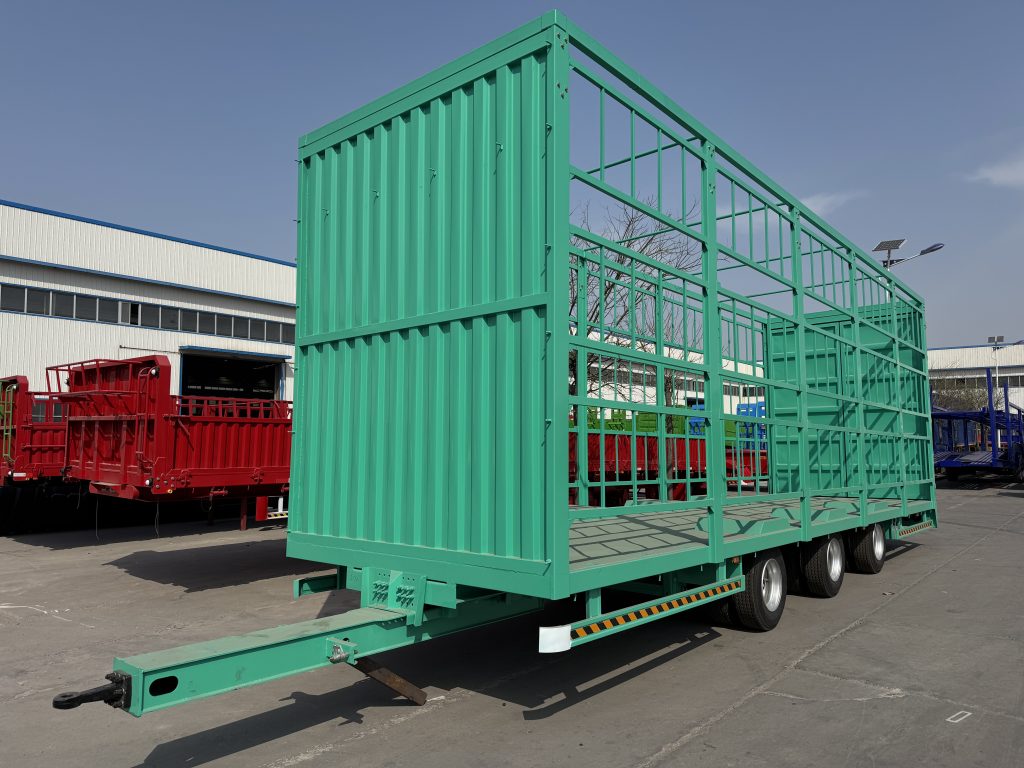
A drawbar trailer is a self-supporting, unpowered trailer that has at least one axle at both the front and rear ends. The front axle is connected to a drawbar and the axle pivots to provide steering, following the direction in which the drawbar is pulled. This is sometimes called a dolly.
The key differences between a semitrailer and a drawbar trailer(full trailer) are that a semitrailer does not have wheels at the front; it has a kingpin which fits inside a fifth wheel coupling or turntable coupling, and the front of the trailer is supported on the rear wheels of the prime mover.
Drawbar trailers are called full trailers in America and New Zealand, and dog trailers in Australia. They are versatile and can be used for many types of cargo, including general freight, construction materials, and specialized loads.
What is a draw bar on a trailer?
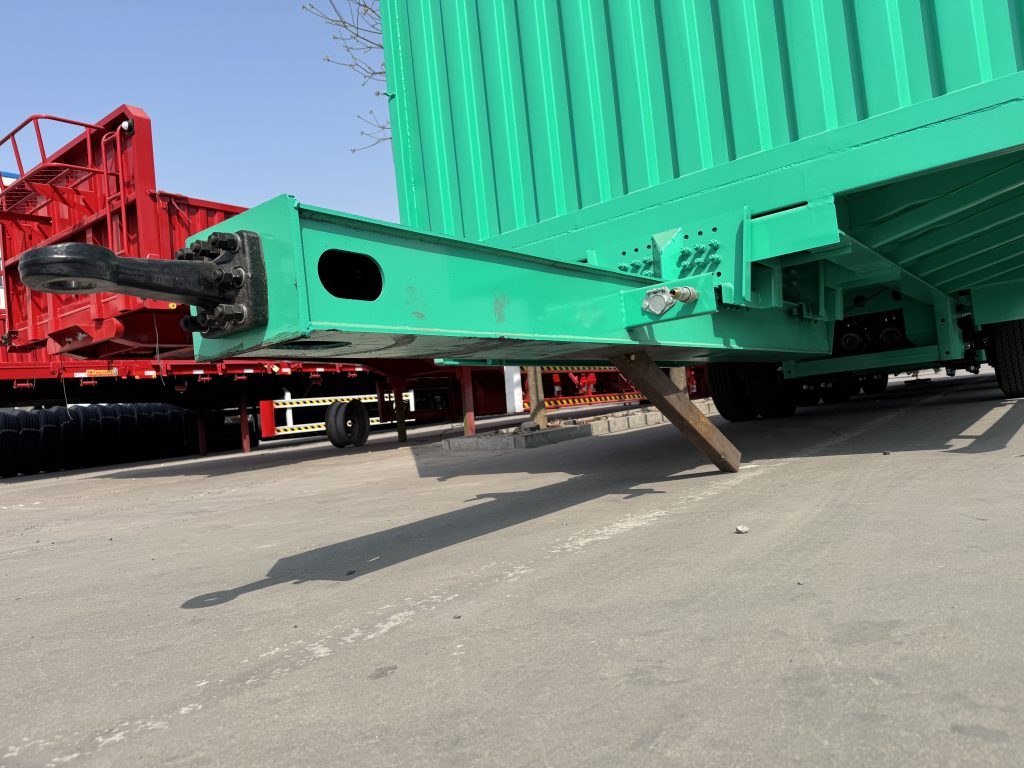
The draw bar on a trailer is the key structural component that connects the trailer to the towing vehicle. It acts as the trailer’s “neck,” transferring the towing force and allowing the trailer to follow the vehicle safely.
Design specifications: Most draw bars are made from strong steel, often shaped in an “A-frame” for extra strength and stability. The strongest designs use rectangular hollow steel sections welded together for rigidity. This design helps distribute the load evenly and keeps the trailer balanced during towing.
Primary function: The draw bar not only connects the trailer but also helps keep the trailer stable by maintaining proper weight distribution. It adds stiffness to the trailer chassis, reducing unwanted movement or swaying during transport.
Connection mechanism: At the front end of the drawbar is an A-frame drawbar eye (or towing eye), a circular loop made of high-tensile steel. This eye fits into a coupling on the towing vehicle, secured by a pin or locking mechanism. The typical sizes for drawbar eyes are 40mm or 50mm in diameter, depending on trailer size and manufacturer specifications.
What type of trailers are drawbar trailers?
Drawbar trailers can be almost any type, but the most common ones are curtainside, box body or hardside, tipper or flat deck. Curtainside and hardside can both be in refrigerated format. There are specialist trailers such as bottom dumpers for spreading aggregate.
Curtainside trailers: These have flexible side curtains for easy loading and unloading from the sides.
Box body or hardside trailers: Fully enclosed trailers that protect cargo from weather and provide enhanced security.
Tippers: Trailers with hydraulic systems to dump loads like sand, gravel, or other bulk materials, including dump trucks.
Flat deck trailers: Open trailers used for large or irregularly shaped cargo that cannot fit in enclosed trailers.
Specialized trailers: Such as bottom dumpers used for spreading bulk materials in construction applications.
The drawbar length is dictated by function and overall length requirements. Short drawbars are used to maximise the amount of load that can be carried as they allow for longer deck lengths within the maximum length. Long drawbars are used where a truck and trailer unit might need to be jackknifed deliberately. This is common in mining and quarrying where the trailer is emptied, the driver pulls forwards, then reverses again, but this time jackknifing the trailer out of the way so that any load carried in the truck can be dumped.
How are drawbar trailers coupled?
The drawbar has a towing eye at the front. This is guided into the jaws of the coupling device where a pin drops through the towing eye. This pin is either 40mm or 50mm, depending on the manufacturer and model.
Coupling types: Heavy drawbar trailers typically use pin and bolt couplings, which securely lock the drawbar eye in place. Light trailers may use ball and hitch couplings for smaller applications.
Manufacturer specifications: Common brands for heavy-duty couplings include Ringfeder, V. Orlandi, Rockinger, and Jost, each offering different load capacities and connection specifications.
Safety requirements: Proper coupling ensures the trailer stays attached during transit and that forces are transmitted safely, preventing accidents caused by trailer detachment or instability.
What vehicles can pull a drawbar trailer?
A prime mover or a rigid heavy vehicle can pull a heavy drawbar trailer. Some agricultural vehicles will be able to, but light vehicles will not. A typical weight for a heavy trailer is between 5000-8000kg.
Prime movers: Heavy-duty trucks designed specifically for hauling large trailers with the necessary power and coupling systems.
Heavy rigid vehicles: Trucks with fixed chassis and powerful engines capable of handling substantial towing loads.
Agricultural vehicles: Some farm tractors can tow drawbar trailers, but they must meet specific power and coupling requirements.
The towing vehicle must have the right type of coupling to tow a drawbar trailer. While small drawbar trailers usually have a ball and hitch coupling, heavy trailers have a pin coupling where the pin drops through the towing eye. Common brands of this type of coupling are V. Orlandi, Ringfeder and Rockinger.
How does drawbar length affect trailer performance?
The length and design of the draw bar affect trailer performance significantly:
Draw bar length specifications: This is the distance between the towing vehicle’s coupling and the trailer’s front axle. A longer draw bar improves stability and makes reversing easier, while a shorter one enhances maneuverability in tight spaces.
Design strength requirements: The draw bar must have high vertical and lateral strength to withstand towing forces. The strongest designs often use rectangular hollow steel sections welded together for maximum rigidity.
Load distribution principles: A well-designed draw bar helps distribute the trailer’s weight evenly, reducing stress on the towing vehicle and improving road handling characteristics.
What maintenance is required for drawbar trailers?
To keep a drawbar trailer safe and functional:
Regular inspection requirements: Inspect the drawbar and coupling for cracks, rust, or wear at scheduled intervals.
Connection point maintenance: Check that the drawbar eye and coupling pins are secure and undamaged before each use.
Wheel and bearing service: Maintain proper tire pressure and check wheel bearings frequently to prevent failures.
Corrosion prevention: Lubricate moving parts and apply protective coatings to prevent corrosion, especially in harsh environments.
Load limit compliance: Follow manufacturer guidelines for load limits and coupling use to prevent overloading.
Hydraulic system safety: Never attempt maintenance on hydraulic systems without ensuring no pressure is present.
Proper maintenance extends the trailer’s life and ensures safe towing operations across all applications.
Why choose a drawbar trailer?
Drawbar trailers offer several advantages over other trailer types:
Versatility: Suitable for many cargo types and industries, from construction to agriculture.
Maneuverability: The pivoting front axle and draw bar allow better steering control in confined spaces.
Load capacity: Wheels on both ends support heavy loads evenly, distributing weight effectively.
Safety performance: When properly coupled and maintained, they provide stable towing performance under various conditions.
Because of these features, drawbar trailers remain a popular choice for heavy transport, construction, agriculture, and specialized hauling tasks where reliability and versatility are essential.
Conclusion
A drawbar trailer is a vital tool in the transport industry, characterized by its self-supporting design and the essential draw bar on a trailer that connects it to the towing vehicle. Understanding its components, types, and proper use helps ensure safe and efficient hauling, including the utilization of road trailers. Whether you are a driver, fleet manager, or enthusiast, knowing what a drawbar trailer is and how it functions will help you make informed decisions about trailer selection, operation, and maintenance.


