English
 Spanish
 French

Skeletal Trailer Basics: What They Are and How to Load Them Right
Skeletal trailers are purpose-built trucks designed for moving large shipping containers. Their stripped-back design keeps transport light and efficient. This guide covers what they are and how to load them properly.
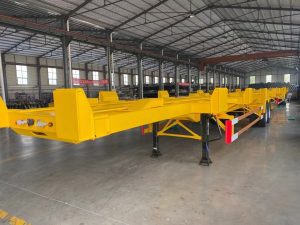
LUEN Skeletal Trailer
Introduction to Skeletal Trailers
A skeletal trailer is a lightweight semi-trailer built to carry one or two ISO shipping containers. The frame is bare by design — just the essentials, like a skeleton — so no unnecessary weight is added.
The main job is moving containers quickly from ships to roads. Skeletal trailers handle 20ft to 45ft containers and operate across ports, rail yards, and highways.
Key advantages include:
- Tare weight under 5 tons, allowing heavier cargo loads
- Lower fuel consumption and running costs
- Tight turning radius for congested yards
- No floor deck, making cleanup straightforward
Skeletal trailers keep freight moving faster and more economically on a daily basis.
Design and Structural Features
The frame uses long steel beams running the full length, with shorter cross-members providing lateral support.
The twist lock system is central to every skeletal trailer. Four locks at the corners grip the container securely. Some skeletal trucks carry up to 12 locks to accommodate multiple container configurations.
Locks twist to hold firm — no shifting on rough roads. Inspect them before every trip.
Axle setups are matched to the load:
- 1 or 2 axles for empty skeletal trailers
- 3 or 4 axles for fully loaded runs
- Sliding axle types adjust on the move
This distributes weight evenly and reduces drag on return trips.
Variants serve different needs. Pull-type skeletal trailers handle standard haulage. Side-lifter skeletal trailers come fitted with onboard cranes capable of lifting up to 8,000kg independently — ideal for locations without dedicated lifting equipment. These skeletal trucks can self-load without outside help.
The kingpin handles tractor pull forces. Landing gear provides stable support when uncoupled. Side guards meet compliance requirements while keeping overall weight low.
Built this way, skeletal trailers are ready for demanding work and last for years with proper maintenance.
Loading Procedures
Self-loading is the main strength of side-lifter skeletal trailers. The crane arms grip the container from the side, lift it clear, swing it over, and lower it onto the twist locks.
Alignment comes first. Then the twist locks are secured and pull-tested to confirm a firm hold.

LUEN side loader trailer
External loading suits most standard skeletal trailers. Options include:
- Overhead cranes dropping the container from above
- Forklifts positioning under each end
- Straddle carriers lifting the full container and placing it directly
Clear the ground before any lift begins.
Pre-load checks are non-negotiable. Read the plate on your skeletal truck — it shows the maximum GVM and axle limits. Cross-reference against RUC or VDAM rules and use the lower safe figure. Weigh the full rig when dealing with an unfamiliar load.
Distribute weight evenly, with 10–20% bias toward the front to aid steering and reduce sway through bends.
Personal protective equipment is required — helmet, gloves, and boots. Call the area clear before any lift. Secure any additional cargo with chains and run a short test drive to catch problems early.
Unloading follows the same steps in reverse. Release the twist locks, lower the container steadily, and watch for pinch points throughout.
Safety, Regulations, and Best Practices
Unknown internal loads are a real risk on skeletal trailers. Weight may be unevenly distributed inside the container, creating instability through corners. An off-centre load can cause rollover.
Axle overload damages wheels and pulls the rig sideways. Know the limits and stick to them.
Drive slowly through curves. Brake early and wide. Recognise rollover warning signs before they become a problem.
Common regulatory limits include:
- Maximum 10,000kg per axle
- Maximum rig length of 16.5m
- Local laws vary — check the rules for your region
Daily inspection of brakes, tyres, and locks is mandatory. Record any faults in the maintenance log and stay compliant.
Skeletal truck drivers should be trained in load weight calculations and hazard recognition. Follow cargo securing standards without exception. Apply extra caution in wet or adverse weather conditions.
When renting skeletal trailers, verify the unit is clean and paperwork is current. Work with experienced load planners. Plan routes that avoid steep gradients when running fully loaded skeletal trailers. Request load distribution details from shippers in advance.
In shared yards, communicate clearly with other operators and stay aware of surrounding machinery. Skeletal trailers perform best as part of a coordinated team.
Consistent care and attention keeps skeletal trailers running safely for the long term. Every load demands the same standard — drive smart, check thoroughly, and load right.
LUEN Skeletal Trailers
Looking for a reliable skeletal trailer? LUEN manufactures heavy-duty skeletal trailers built for port, rail, and highway operations. Available in 20ft to 45ft configurations with multi-axle options, full twist lock systems, and low tare weight design.
Factory-direct pricing. Exported to 60+ countries. Built to last.
Contact Us: +86 17686798823(whatsapp)