English
 Spanish
 French

What Is Lowboy Trailers
A lowboy trailer (often called a “low boy” or “lowboy truck trailer”) is a specialized type of semi-trailer that serves as the backbone for transporting heavy, oversized, and tall equipment across our highways. These lowboy trailers feature a remarkably low deck height—typically ranging between 16 to 36 inches above ground—which gives them the unique capability to transport loads that would otherwise exceed normal height restrictions on standard flatbed trailers. This specialized design makes lowboy trucks absolutely essential in demanding industries like construction, manufacturing, and energy, where moving bulky machinery is a daily necessity rather than an exception.
What Is a Lowboy Trailer?

LUEN Lowboy Trailer
Understanding what is a lowboy trailer starts with recognizing its distinctive engineering. A lowboy trailer is fundamentally defined by two strategic drops in deck height: the first occurs just after the gooseneck that connects to the truck, and the second happens before the rear wheels. This innovative design creates a deck that sits remarkably close to the ground. The low deck configuration is what gives lowboy trailers their exceptional ability to carry equipment reaching heights of up to 12 feet—something that standard trailers simply cannot accommodate within legal transportation limits.
Key Features
Low Deck Height: The signature characteristic of a low boy trailer, making it the go-to solution for oversize or exceptionally tall loads that challenge conventional transportation methods.
Gooseneck: Many lowboy trucks are equipped with removable goosenecks, which provide operators with enhanced loading flexibility by allowing the front of the trailer to be lowered directly to ground level.
Robust Construction: These trailers are engineered from heavy-duty materials and feature multiple axles strategically positioned to support extraordinarily heavy weights while maintaining safety standards throughout transport.
Advanced Tie-Down Systems: Specialized restraint equipment including heavy-duty straps, chains, and reinforced D-rings work together to secure cargo firmly and reliably during transport operations.
Uses of Lowboy Trailers
Lowboy trailers serve as the primary transportation solution for equipment like bulldozers, excavators, cranes, and other oversized industrial machines that define modern infrastructure development. When professionals ask “what is a lowboy trailer used for,” the answer centers on heavy and overdimension cargo that exceeds the capabilities of standard flatbeds or step-deck trailers. The low deck design is crucial because it helps operators keep overall load height under legal transportation limits, allowing trucks to travel standard routes without requiring special clearance permits or route restrictions. Key industries that depend heavily on lowboy trailers include:
- Construction – Moving earth-moving equipment and machinery to job sites
- Energy – Transporting components like wind turbines and power generation equipment
- Manufacturing – Shipping heavy industrial machinery and production equipment
- Heavy equipment transport – Specialized hauling for oversized loads
Types of Lowboy Trailers
The market offers several distinct types of lowboy trailers, each engineered to meet specific hauling requirements and operational challenges:
Fixed Gooseneck Lowboy Trailer (FGN): This configuration features a permanently attached neck and offers a longer deck length. While it’s generally lighter than some alternative designs, it provides less flexibility for loading operations compared to removable options.

Removable Gooseneck Lowboy Trailer (RGN): The gooseneck section detaches using advanced hydraulic systems, creating a loading ramp that allows heavy cargo to be driven directly on or off the trailer bed with remarkable ease and safety.

Related:Comprehensive Guide: Understanding RGN Trailers and Lowboy Trailers in Heavy Hauling
Folding Gooseneck Trailer: This innovative design combines elements of both fixed and removable systems by featuring a gooseneck that folds down hydraulically rather than completely detaching. The folding mechanism creates a smooth loading angle while maintaining structural integrity, making it particularly effective for equipment that requires precise positioning during loading and unloading operations.
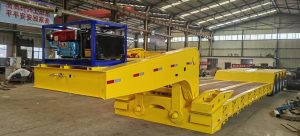
Stretch Lowboy Trailers: These specialized units are specifically designed for extremely long or oversized loads where the well section extends 25 to 29 feet, effectively preventing problematic overhang situations that could create transportation hazards.
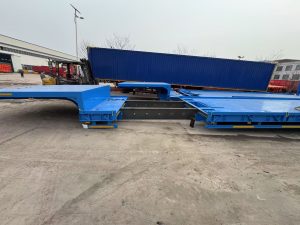
Related:Stretch and Extendable Trailers: A Complete Guide to Their Utility and Advantages
Loading a Lowboy Trailer
Lowboy trailer loading operations typically involve sophisticated techniques using ramps or detachable gooseneck sections depending on the trailer type and cargo requirements. Many modern lowboy trucks utilize advanced hydraulic systems to lower the deck or completely detach the gooseneck (particularly in RGN models), enabling heavy equipment to be driven directly onto the trailer bed safely and with maximum operational efficiency. This loading capability significantly reduces the need for additional lifting equipment and minimizes handling risks.
Advantages of Lowboy Trailers
Enhanced Stability: The inherently low center of gravity dramatically reduces the risk of tipping incidents when transporting heavy loads, providing superior stability compared to higher-deck alternatives.
Operational Versatility: These trailers can successfully handle an extensive range of oversized items, making them invaluable assets for diverse transportation challenges.
Exceptional Longevity: Built specifically for demanding heavy-use applications, lowboy trailers require less frequent maintenance while delivering consistent performance over many years of service.
Height Compliance Assurance: The design allows operators to haul loads up to 12 feet in height while maintaining full compliance with standard road height restrictions, eliminating permit complications.
Disadvantages of Lowboy Trailers
Significant Initial Investment: Purchasing or renting a lowboy trailer represents a considerably higher financial commitment compared to standard flatbed alternatives, though this cost is often justified by specialized capabilities.
Cargo Limitations: These trailers are not suitable for transporting delicate items, perishable goods, or temperature-sensitive cargo that requires climate control during transport.
Specialized Skill Requirements: Loading and properly securing cargo on lowboys demands experienced operators who understand the unique safety challenges and proper securement techniques required for oversized loads.
What Does “Lowboy Overdimension” Mean?
Lowboy overdimension or “overdimensional loads” refer specifically to cargo that exceeds standard legal size or weight limitations established by transportation authorities. While lowboy trailers are specifically engineered for carrying such oversize freight, these operations typically require special transportation permits and careful route planning to ensure compliance with local regulations and infrastructure limitations.
Is a Lowboy Trailer Right for You?
If your business operations require regular transportation of heavy or oversized equipment, investing in a lowboy trailer truck represents a strategic decision that can significantly improve your operational capabilities. Key factors to evaluate include the frequency of your heavy hauling needs, compatibility with your existing truck fleet specifications, and available budget for equipment acquisition. For businesses where purchasing isn’t immediately feasible, rental options for lowboy trailers are widely available through specialized transportation equipment providers.
Frequently Asked Questions
How much do lowboy trailers weigh? The weight varies significantly based on size specifications and construction materials, with lowboy trailers typically weighing between 15,000 to 40,000 pounds depending on their intended capacity and design features.
How long is a lowboy trailer? Standard length measures approximately 53 feet overall, with the critical well sections usually spanning 24 to 26 feet in length; specialized models can extend to nearly 30 feet to accommodate particularly long cargo.
What is a lowboy truck? A lowboy truck refers to the complete tractor-trailer combination where a specialized tractor unit pulls a lowboy trailer, creating an integrated heavy-haul transportation system.
How does lowboy trailer loading work? Loading operations utilize either ramps or detachable gooseneck systems to allow equipment to be driven directly onto the trailer bed. Heavy machinery is then secured using specialized tie-down hardware engineered for extreme loads.
Summary
A lowboy trailer represents an essential transportation solution for moving heavy, tall, or oversized loads safely and efficiently through its innovative low deck height design, superior stability characteristics, and advanced load security systems. Whether referred to as a “low boy,” “lowboy truck,” or “truck lowboy trailer,” these specialized trailers provide the critical transportation capability that industries depend on for moving oversized equipment and machinery that defines modern infrastructure and industrial operations.
Ready to invest in quality lowboy trailers for your fleet? LUEN offers a comprehensive selection of premium lowboy trailers engineered for durability, safety, and maximum payload capacity. Our lowboy trucks are built to meet the demanding requirements of heavy-haul operations while delivering the reliability your business depends on. Contact LUEN today to discover how our lowboy trailer solutions can enhance your transportation capabilities and keep your operations moving forward.
Also Read: