English
 Spanish
 French

Flatbed Trailer Types: A Comprehensive Guide
What is a Flatbed Trailer?
A flatbed truck trailer carries goods that can’t fit in regular enclosed trailers. It has a flat, open bed with no sides or roof, making it ideal for carrying large, heavy, or irregularly shaped items. Flatbed trailers have a special bed design. They are commonly used in construction, agriculture, and freight transport.
Advantages of Using Flatbed Trailers
Flatbed trailers offer several advantages:
-
Versatility: Flatbed truck trailers can transport many types of cargo. They carry everything from machinery to building materials.
-
Easy Loading and Unloading: With no sides or roof, you can load and unload faster. This is especially helpful in tight spaces.
-
Stability: Cargo is safer from damage because it can be fastened securely. There’s no worry about sides restricting the load.
Key Features of Flatbed Trailers
-
Open Deck: No sides or top, allowing for flexible cargo arrangements.
-
Heavy Duty: Built to carry large loads, with strong axles and frames.
-
Variety of Sizes: Comes in various lengths, widths, and weight limits to fit your needs.
Common Types of Flatbed Trailers
Standard Flatbed Trailer

This is the most common flatbed trailer type. It has a simple, open deck for loading large or heavy goods.
-
Characteristics: A flat, open deck with no sides or roof.
-
Applications: Transporting construction materials, machinery, or other oversized goods.
-
Suitable Freight Types: Steel, lumber, heavy machinery, large equipment.
Drop Deck Trailer (Step Deck Trailer)

A drop deck trailer, also known as a step deck, has a lower rear deck. This design helps carry taller loads without going over height limits.
-
Characteristics: The back of the trailer is lower than the front. This creates two levels.
-
Applications: Ideal for moving taller equipment that must stay low for safe travel.
-
Suitable Freight Types: Large machines, building materials, oversized freight.
Stretch Flatbed Trailer (Extendable Flatbed)

A stretch flatbed trailer can be extended to carry longer loads.
-
Characteristics: The length of the trailer can be increased or decreased as needed.
-
Applications: Used for transporting long items like pipes, beams, or large vehicles.
-
Suitable Freight Types: Long construction materials, oversized vehicles.
Lowboy Trailer
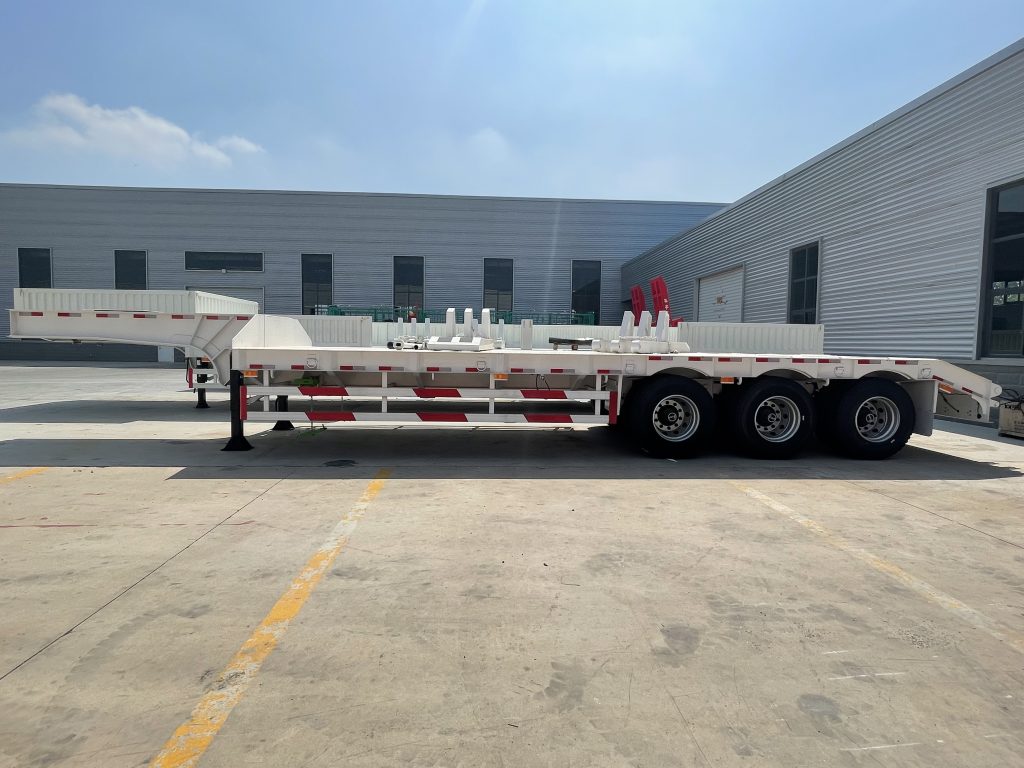
A lowboy trailer has a low deck. This makes it perfect for hauling tall or heavy loads, like construction equipment. These loads often exceed height limits for standard trailers.
-
Characteristics: A low-riding deck with a high weight capacity.
-
Applications: Used to transport large equipment like cranes and construction vehicles.
-
Suitable Freight Types: Excavators, cranes, large construction machinery.
Side Kit Trailer

Characteristics: Removable sides that add extra protection for cargo made of plywood.
-
Characteristics: Removable sides that add extra protection for cargo. Made of plywood.
-
Applications: Used for goods that need additional protection but still require an open deck for easy loading.
-
Suitable Freight Types: Building materials, industrial goods.
Removable Gooseneck (RGN) Trailer

An RGN trailer allows the front of the trailer to detach, making it easier to load and unload heavy equipment.
-
Characteristics: The front of the trailer (gooseneck) can be removed to lower the deck for easier access.
-
Applications: Used for transporting heavy, large equipment.
-
Suitable Freight Types: Construction machinery, large vehicles, oversized freight.
How to Choose the Right Flatbed Trailer
- Consider Freight Type and Dimensions : The type of cargo you plan to transport should determine which flatbed trailer you choose. Consider the size, weight, and shape of your freight.
- Consider Distance and Route : Think about the route your trailer will take. Some trailers, like lowboy or drop deck trailers, are better for navigating roads with height restrictions.
- Consider Weight Capacity Requirements : Make sure the trailer you choose can handle the weight of your cargo. For heavy loads, you may need a stronger trailer like a lowboy or stretch flatbed.
- Consider Budget : Cost is always an important factor. Basic flatbed trailers are often cheaper, but specialized trailers may be necessary for specific types of loads.
Safety Considerations for Flatbed Trailer Transport
- Proper Cargo Securement Methods : It’s crucial to secure cargo properly to prevent accidents during transport. Always use tie-downs, chains, and straps to keep your load stable.
- Weight Distribution : Evenly distribute the weight across the trailer to ensure safe handling on the road. Improper distribution can affect the trailer’s stability.
- Regulations and Permits : Depending on the size and weight of your load, you may need special permits to transport goods using certain flatbed trailers.
Conclusion
Flatbed trailers come in different types. Each flatbed trailer type is made to carry certain kinds of freight. Choose the right trailer for your needs, like a flatbed, lowboy, or Conestoga. This choice, along with the right equipment, ensures safe and efficient transport. Consider your freight type, route, and budget when selecting a flatbed trailer for your business.
FAQ
What is the most common type of flatbed trailer?
The most common type of flatbed trailer is the standard flatbed trailer. This trailer has a flat, open deck with no sides or roof. It’s perfect for moving various cargo, such as construction materials, machinery, and large loads. Standard flatbed trailers come in various sizes. They have different lengths and weight limits. This variety helps transport goods more flexibly. They are widely used across industries due to their versatility and ease of loading and unloading.
Another name for a flatbed trailer is a “flat deck trailer.” These trailers have a flat, open cargo area. This makes them great for moving large or heavy loads. These loads often can’t fit in standard enclosed trailers. Sometimes, an escort vehicle is needed for safety.
What is another name for a flatbed trailer?
Another name for a flatbed trailer is a “flat deck trailer.” These trailers have a flat, open cargo area. This design makes them great for moving large or heavy loads that can’t fit in regular enclosed trailers.