English
 Spanish
 French

What Is the Difference Between an Intermodal Chassis and a Flatbed Trailer?
Navigating the world of freight transportation requires a clear understanding of equipment differences, particularly between two essential transport solutions. A chassis trailer (also known as a trailer chassis, containers chassis, or simply chassis container) represents a specialized engineering solution designed exclusively for transporting standardized shipping containers with maximum security and efficiency. In contrast, a flatbed intermodal trailer functions as an open, versatile platform engineered to accommodate diverse cargo types that cannot be containerized or require unconventional loading methods.
These specialized transport vehicles serve distinct purposes in the logistics ecosystem, and understanding their fundamental differences empowers businesses to make strategic equipment decisions. Selecting the right option between chassis trailer and flatbed solutions can significantly impact operational efficiency, cost-effectiveness, cargo security, and delivery timelines while minimizing transportation risks and handling complications.
What Is an Intermodal Chassis?

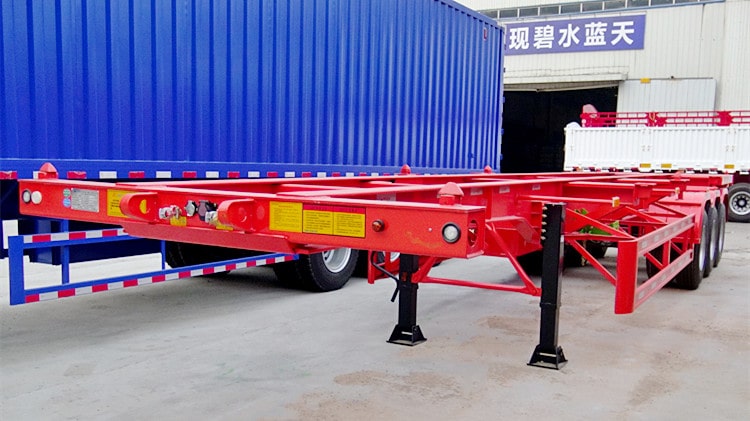
LUEN Intermodal chassis
An intermodal chassis serves as a sophisticated semi-trailer framework engineered specifically for secure container transportation across multiple transport modes. This specialized equipment, frequently referred to as a container chassis or skeletal trailer, incorporates a robust steel construction featuring precision-engineered locking mechanisms called twist locks that create an unbreakable connection between the chassis and container during transit.
Key Features and Applications:
- Seamless Intermodal Integration: These chassis trailers facilitate smooth cargo movement between ports, railyards, and distribution centers, enabling containers to transfer effortlessly across ships, trains, and trucks without requiring cargo unloading or repacking.
- Adaptive Design Options: Modern chassis feature adjustable configurations to accommodate standardized container lengths, including 20-foot, 40-foot, and 45-foot specifications, providing flexibility for diverse shipping requirements.
- Specialized Manufacturing: Industry leaders like LUEN have established reputations for producing premium chassis models featuring innovative designs such as extendable frames, sliding bogeys, and shipping containers trailer configurations that meet the most demanding transport challenges.
The precision engineering of these containers chassis ensures maximum cargo security while optimizing weight distribution and structural integrity throughout the transportation process.
What Is a Flatbed Trailer?
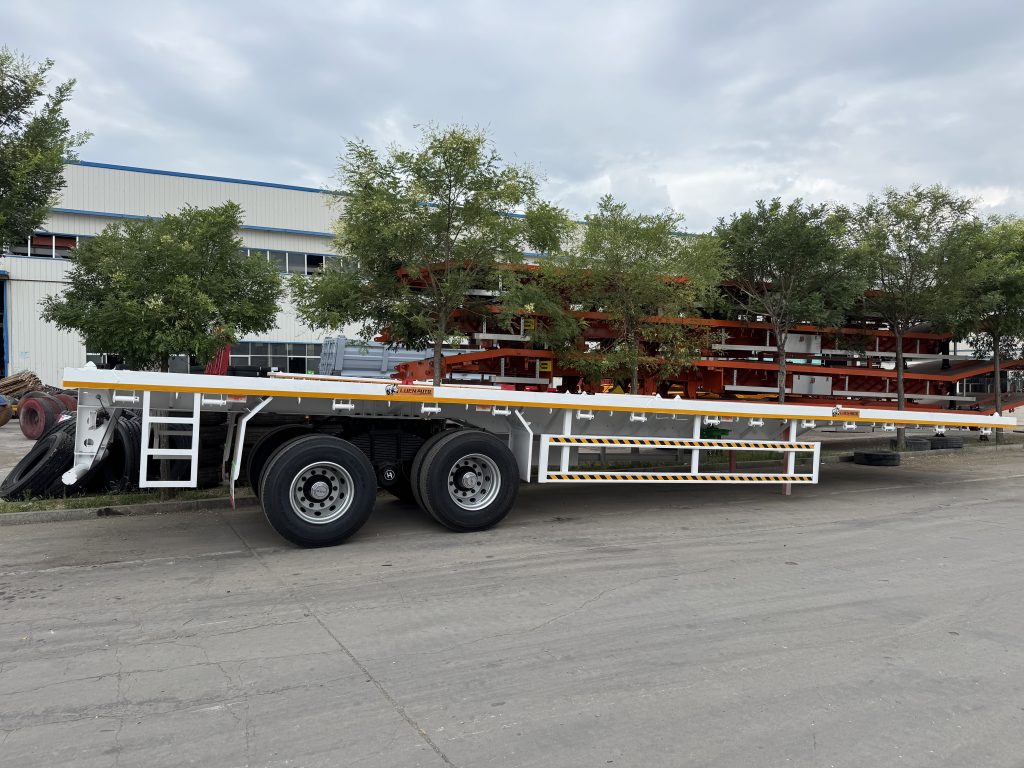
LUEN Flatbed Trailer
The flatbed intermodal trailer represents the ultimate in cargo versatility, featuring an completely open platform design without restrictive sides or overhead coverage. This engineering approach enables flatbed freight transportation of diverse cargo categories, including heavy machinery, structural steel beams, lumber products, vehicles, and oversized industrial equipment that simply cannot be accommodated within standard containerized systems.
Versatility and Practical Applications:
- 360-Degree Loading Access: The open structure design allows loading and unloading operations from any angle, utilizing cranes, forklifts, or specialized lifting equipment for maximum operational flexibility.
- Specialized Configurations: Modern flatbed solutions include standard flatbeds, step deck variations, and double drop trailers, each engineered to handle specific load dimensions, weights, and height requirements.
- Industry Applications: These versatile platforms serve as essential equipment in construction, manufacturing, and agricultural sectors where cargo dimensions and loading requirements exceed conventional container limitations.
Key Differences Between Chassis Trailer and Flatbed Trailer
| Aspect | Intermodal Chassis (Container Chassis) | Flatbed Trailer |
|---|---|---|
| Primary Purpose | Securely transport standardized shipping containers across multiple transport modes | Handle diverse cargo types including oversized and irregularly shaped goods |
| Structural Design | Skeletal steel framework with precision twist locks positioned at container corner points | Open, flat platform without sides or overhead restrictions |
| Cargo Compatibility | Exclusively containerized cargo with standardized dimensions | Non-containerized cargo including machinery, construction materials, and vehicles |
| Securing Methodology | Integrated twist lock systems built directly into trailer chassis frame | External securing systems including straps, chains, tarps, and specialized tie-downs |
| Size Adaptability | Fixed or extendable configurations for standard container sizes (20, 40, 45 ft) | Multiple length options and deck configurations for varied cargo requirements |
| Operational Environment | Ports, rail terminals, warehouses, and drayage transportation networks | Construction sites, industrial facilities, and specialized freight applications |
| Weight Management | Engineered for container weight specifications with adjustable axle positioning for optimal weight distribution | Variable capacity designs capable of handling extremely heavy or irregular load configurations |
How to Choose Between Chassis Trailers and Flatbed Intermodal
Making the optimal equipment selection requires careful evaluation of several critical factors that directly impact operational efficiency and cost-effectiveness:
Cargo Type Analysis:
- Containerized Shipping: When transporting standardized containers, a chassis trailer becomes absolutely essential for secure, efficient movement.
- Non-Containerized Freight: For oversized, irregularly shaped, or specialized items, flatbed intermodal solutions provide the necessary flexibility and accessibility.
Transportation Mode Requirements:
- Multi-Modal Operations: Utilize chasis trailer solutions for comprehensive intermodal shipments spanning sea, rail, and road transport networks.
- Road-Focused Transport: Deploy flatbed solutions primarily for highway transport or direct site-to-site deliveries where intermodal capabilities aren’t required.
Load Characteristics Evaluation: Consider cargo dimensions, weight distribution, and geometric constraints. Flatbed platforms offer superior adaptability for irregular or oversized loads that exceed standard container specifications.
Equipment Sourcing and Brand Considerations: Established manufacturers like LUEN deliver industry-leading chassis trailers with customizable options designed to meet diverse shipping requirements while ensuring compliance with safety regulations and operational standards.
Additional Notes on Terminology and Related Equipment
Terminology Clarifications: The freight industry commonly uses various spellings and terms including trailer chasis, chasis trailer, and chasis trailers, all referring to similar chassis framework systems designed for container transport applications.
Specialized Equipment Categories:
- Advanced Chassis Types: Modern solutions include sliding mechanisms, extendable configurations, gooseneck designs, and specialized tank container chassis for liquid transport applications.
- Power Integration: Many chassis trailers can be equipped with auxiliary power units called gensets to maintain temperature control for refrigerated container transport.
- Platform Variations: Flatbed trailers encompass various configurations including semi-trailers, lowbed options, and step deck designs, each differentiated by deck height specifications and load capacity ratings.
Summary
In conclusion, the intermodal chassis represents a highly specialized transport solution engineered exclusively for secure, efficient movement of standardized shipping containers across integrated multi-modal transportation networks. Conversely, the flatbed intermodal trailer provides an open, adaptable platform ideal for accommodating diverse cargo types requiring unconventional loading access or exceeding containerization limitations.
Selecting the appropriate chassis trailer or flatbed intermodal solution ensures optimal cargo security, operational efficiency, and cost-effectiveness in freight transportation operations. This strategic equipment decision directly impacts delivery performance, handling safety, and overall supply chain optimization.
This comprehensive analysis incorporates essential terminology naturally while delivering practical guidance for making informed decisions about transport equipment selection, ultimately helping logistics professionals choose the most suitable solution for their specific freight transportation requirements.
About LUEN Intermodal Chassis
When selecting the right chassis solution for your intermodal transportation needs, LUEN Intermodal Chassis stands as a trusted partner in the freight industry. With a commitment to engineering excellence and innovative design, LUEN offers a comprehensive range of chassis solutions including standard, extendable, and tri-axle configurations. Our chassis are built to meet the demanding requirements of modern logistics operations while ensuring optimal safety, durability, and operational efficiency for your cargo transportation needs.