English
 Spanish
 French

Load Containers on a Trailer Safely: Step-by-Step Instructions
Loading containers on a trailer might seem intimidating at first glance, but it’s actually quite manageable once you understand the fundamentals and follow proven safety protocols. This guide walks you through how to Load Containers on a Trailer safely and efficiently, giving you the knowledge to handle container transport with complete confidence.

Know Your Container and Trailer
Before you load container units, take time to understand exactly what equipment you’re working with. Containers aren’t one-size-fits-all—they range from standard 20-footers to high cubes and specialized refrigerated units, each with distinct weight capacities and dimensional requirements. Your trailer setup matters just as much, whether you’re using a flatbed, container chassis, tilt trailer, or side-lifter configuration, and it needs to be properly rated for your load.
Double-check the trailer’s ID plate or accompanying documentation to verify its actual capacity. This isn’t just good practice—it’s essential. Never attempt to Load Containers on a Trailer when the combined weight of the container and its contents exceeds what your trailer or truck can safely handle.
Prepare the Site and Equipment
Creating a safe loading environment starts with choosing the right location. You need flat, solid ground that won’t shift under weight, and the area must be completely clear of obstacles. Position the trailer on level terrain to prevent any tilting during the loading process, and ensure there’s adequate clearance on all sides for your lifting equipment—whether that’s a crane, forklift, or built-in tilt mechanism—to operate freely.
Always scan overhead before you begin. Power lines, overhanging branches, or nearby structures can become serious hazards when you’re moving large containers vertically. Take a moment to identify and account for these potential obstacles.
Lock everything down before you Load Containers on a Trailer. Engage the parking brake firmly, position wheel chocks snugly against the trailer tires, and walk the trailer deck to spot any damage, loose debris, or surface issues that might compromise stability. Give your lifting equipment a thorough once-over too—inspect cranes, forklifts, or hydraulic systems to confirm they’re functioning properly and rated appropriately for your container weight.
Inspect the Container
You can’t cut corners on container inspection—safety depends on it. Circle the entire unit and look carefully for signs of deterioration: rust perforation, bent or buckled corner posts, compromised flooring, or damaged corner castings that might fail under stress. Test the doors physically to ensure they swing freely and that the locking mechanisms engage properly.
Calculate the gross weight accurately, factoring in both the container itself and everything inside it, then cross-reference that number against your lifting gear and trailer specifications. If anything looks questionable or the numbers don’t add up safely, stop. Don’t try to load container units until you’ve addressed and resolved the issue.
Choose the Right Loading Method
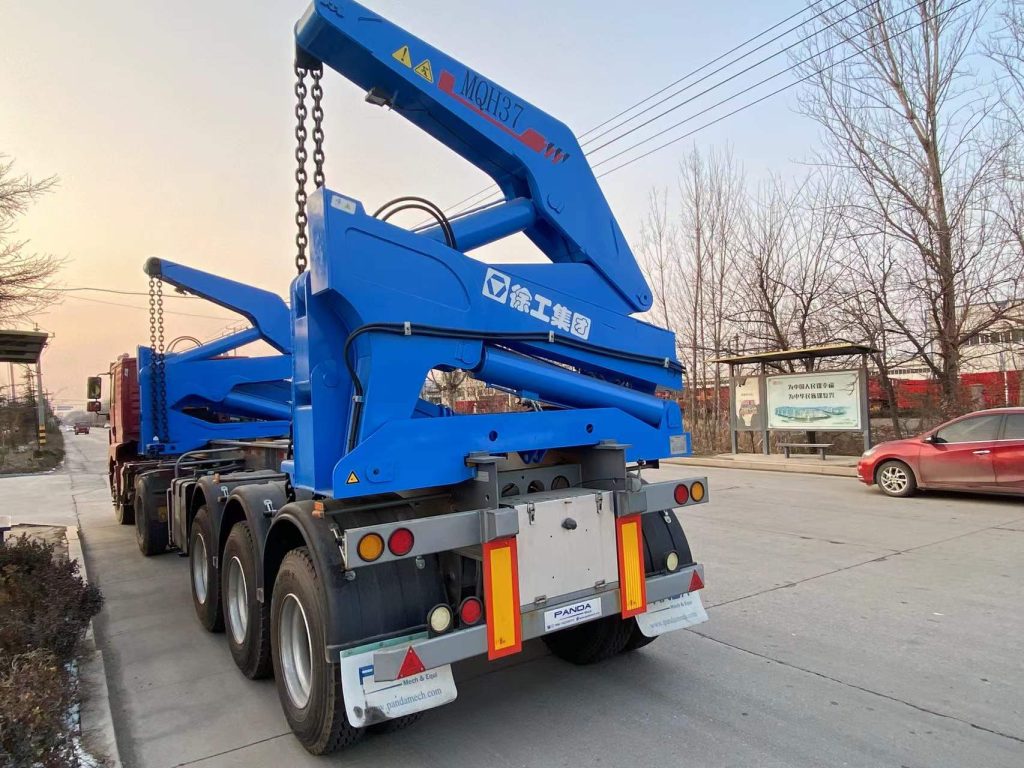
LUEN Side Loader Trailer
There are multiple proven approaches to Load Containers on a Trailer, and selecting the right one depends entirely on your specific trailer type and available equipment.
Tilt or Roll-Off Trailer
A container tilt trailer offers a self-contained solution using integrated hydraulics to do the heavy lifting. The trailer bed angles backward until the rear edge contacts the ground, creating a ramp that allows the container to be winched or rolled directly onto the deck. This method requires careful attention—keep all personnel at a safe distance from the moving container and maintain slow, controlled movement to keep everything tracking straight.
Side-Lifter Trailer
Side-lifters feature crane mechanisms mounted along the trailer’s length, capable of hoisting containers from ground level or transferring them from other vehicles. To Load Containers on a Trailer using this method, first deploy and stabilize the support legs, then attach the chains or specialized lifting gear to the container’s corner fittings. Raise the unit smoothly and deliberately, ensuring it’s properly aligned with the trailer’s twist locks before you complete the descent.
Crane Loading
Mobile crane operations require precise positioning. Park your trailer in a straight line with unobstructed access for the crane’s boom to maneuver. Connect approved rigging to the container’s corner castings, then execute a vertical lift. Move the suspended load slowly and deliberately through its arc, then guide it down onto the trailer deck, making certain the container settles squarely and evenly.
Forklift or Lift Truck
Heavy-duty container forklifts provide another viable option to Load Containers on a Trailer, though the equipment must meet specific requirements. Your forklift needs sufficient capacity for the total container weight and either extended forks or a proper container spreader attachment. Approach the container head-on, raise it just high enough to clear ground obstacles, then advance slowly toward the trailer. Once you’re in position, align the container carefully with the deck surface and set it down gently and precisely.
Position and Balance the Container
Proper placement makes all the difference once you’ve successfully load container units onto your trailer. The container should sit centered laterally so weight distributes evenly across both sides. For longitudinal positioning, typically you’ll want the door end toward the trailer’s rear, though this can vary based on local regulations or your specific trailer design.
Weight distribution directly affects road stability and handling. If your container carries uneven internal weight, position the heavier end closer to the truck cab so your drive axles bear appropriate load without overloading the rear suspension. Always verify you’re complying with legal axle weight limits in your jurisdiction when you Load Containers on a Trailer.
Secure the Container to the Trailer
A container on a trailer absolutely cannot shift during transit—this is non-negotiable. Most container trailers use twist locks or locking pins designed to engage precisely with the container’s corner castings. After you load container units and achieve proper positioning, rotate each twist lock to its fully engaged position and confirm it’s locked against accidental release.
Depending on your setup, you might supplement this with chains, straps, or load binders for additional security. Use only properly rated chains and apply tension uniformly so the container sits firmly without inducing stress or deformation. Walk a complete circuit around the trailer, physically checking every securing point to verify that locks, chains, and straps are tight, properly tensioned, and free from damage before departure.
Safety Checks Before Moving
Before you release the brakes and start rolling, run through a comprehensive safety verification. Confirm the container sits level, centered, and locked at all four corner points. Validate that the loaded container weight falls within your truck and trailer’s rated capacities, and ensure all doors are properly closed and sealed if your cargo requires it.
Clear the work area completely of personnel and equipment, remove your wheel chocks, and test your trailer lights and brake systems. These final checks might seem routine, but they’re what transform every trip with a container on a trailer from potentially risky to reliably safe.
Tips for Efficient and Safe Loading
Smart planning makes the process of Load Containers on a Trailer significantly smoother. Coordinate timing so your container and trailer arrive ready simultaneously, and select your loading method based on actual site conditions and available equipment rather than assumptions. For operations that repeat regularly, develop a straightforward checklist covering site preparation, equipment verification, container inspection, loading execution, securing, and final walkthrough review.
When you load container units for clients or work with a mixed team, take a moment to communicate basic safety principles clearly. Everyone needs to understand and respect the inherent dangers of working with heavy loads. Clear, straightforward procedures help maintain safety even when you’re working with people who don’t handle a container every day.
Choose LUEN for Reliable Container Transport Solutions
When you need dependable equipment to Load Containers on a Trailer, LUEN delivers the right solution for every transport challenge. Our comprehensive range of specialized trailers is engineered specifically for safe, efficient container handling across diverse operational requirements.
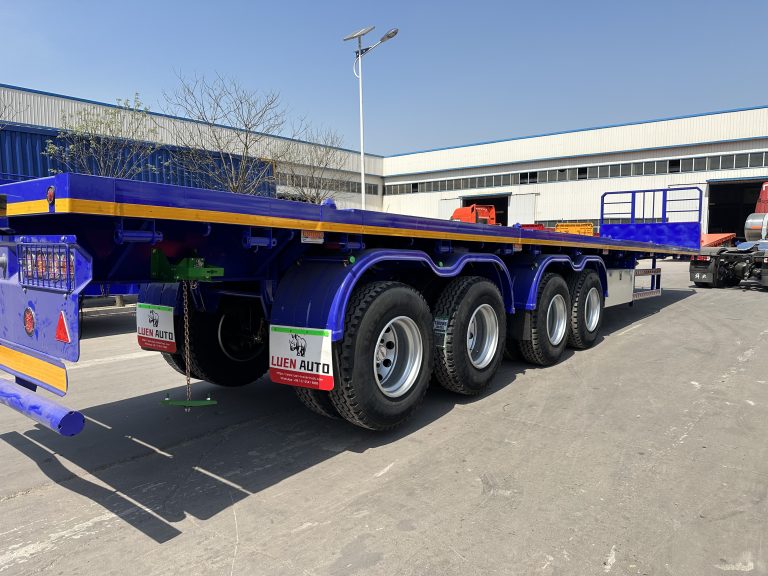
LUEN’s flatbed trailers provide exceptional versatility for modified or oversized containers that don’t fit standard dimensions. Built with reinforced decking and multiple tie-down points, these trailers handle non-standard loads with confidence while maintaining full compliance with DOT regulations.
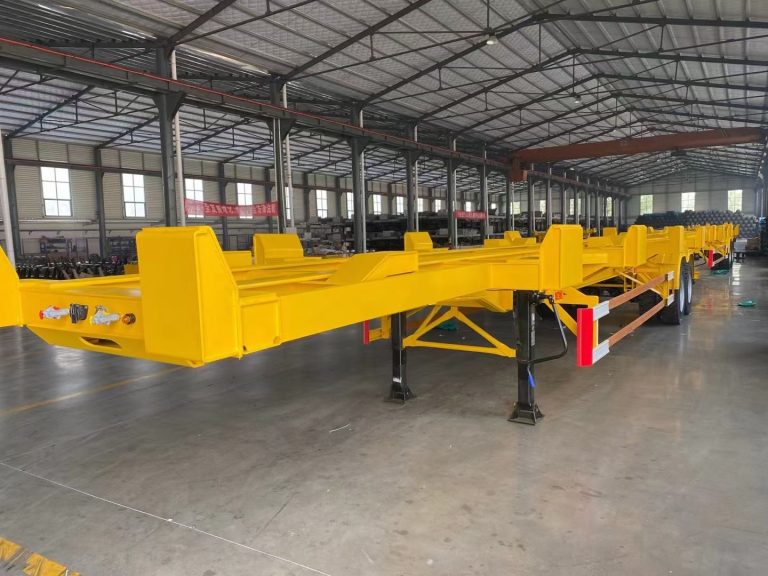
Our precision-engineered container chassis models offer the gold standard for port-to-destination moves. Each chassis features robust twist lock systems that engage securely with container corner castings, ensuring your load stays locked in place throughout transit. Available in configurations for standard, high-cube, and heavy-duty applications, LUEN chassis are rated to handle the full spectrum of container weights.
For operations requiring maximum efficiency and minimal ground support, LUEN’s side-lifter configuration trailers revolutionize the loading process. Equipped with hydraulically operated lifting arms and stabilizing legs, these self-sufficient units allow you to load container units independently without external cranes or forklifts. This capability dramatically reduces loading times and eliminates the cost and coordination challenges of hiring lifting equipment.
LUEN designs every trailer with operator safety and long-term durability as core priorities. Our equipment undergoes rigorous testing to meet international transport standards, giving you peace of mind whether you’re moving a single container across town or managing a full fleet operation. When you choose LUEN, you’re investing in proven performance that makes every job safer and more profitable.