English
 Spanish
 French
A Comprehensive Guide to the Various Types of Semi Trailers Used in Freight Transportation
If you’ve ever wondered about those massive trailers cruising down the highway, you’re not alone. Semi-trailers really are the unsung heroes of freight transportation – they’re what keep our economy moving, quite literally. Whether you’re just getting into the trucking business or you’ve been around for years, understanding the different types of semi trailers can make all the difference in your operations.
Think about it this way: choosing the wrong trailer for a job is like trying to haul concrete with a pickup truck. It’s just not going to work out well for anyone involved. That’s why we’ve put together this guide covering everything from the basics to the nitty-gritty details of trailer specifications.
What Exactly Are Semi-Trailers Anyway?
Here’s the thing about semi-trailers – they’re pretty clever in their design. Unlike regular trailer that have wheels both front and back, a semi trailer only has rear axles. The front end gets supported by the tractor unit through what’s called a fifth-wheel coupling. It’s this setup that creates that flexible connection you see on the road, allowing the whole rig to navigate turns much more easily than you might expect.
Now, there’s quite a variety when it comes to semi truck trailer types. Each one has been designed with specific cargo and transportation needs in mind. From basic flatbeds to highly specialized refrigerated units, the world of trailer types for semis is more diverse than most people realize.
Full Trailer vs Semi-Trailer: What’s the Real Difference?
This is where things get interesting. A lot of folks get confused about the difference between full trailers and semi-trailers, and honestly, it’s not always obvious at first glance.
What Exactly Is a Full Trailer?
Picture a full trailer as the more independent cousin of the semi-trailer family. These guys come equipped with both front and rear axles, which means they can actually support their own weight without leaning on the truck. They hook up to the towing vehicle through a drawbar and coupling system – think more like how you’d attach a boat trailer to your car, just on a much larger scale.
You’ll typically see full trailers being used for shorter hauls or when the route involves multiple stops. They’re pretty popular in construction work, farming, and forestry operations where the terrain might be a bit rougher.
Breaking Down the Key Differences
Let me break this down in a way that actually makes sense:
Axle Setup: Full trailers have their own front and rear axles, while semi-trailers only have rear axles and depend on the tractor for front support.
Weight Distribution: With full trailers, the trailer handles its own weight. Semi-trailers, on the other hand, transfer some of that weight to the tractor unit, affecting the overall length of the combination.
How They Connect: Full trailers use a drawbar system, but semi-trailers connect through that fifth-wheel setup we mentioned earlier.
Getting Around: Here’s where it gets practical – semi-trailers are generally easier to maneuver because they only have one pivot point. Full trailers can be trickier, especially in tight spaces.
What They’re Used For: Full trailers tend to handle shorter distances and multi-stop routes, while semi-trailers are the workhorses of long-haul highway freight.
Size and Capacity: Semi-trailers typically offer more cargo space and can handle heavier loads.
When Do You Actually Want a Full Trailer?
Full trailers make sense when your tractor can’t take on additional weight or when you need that extra stability over rough terrain in the trucking industry, helping to optimize fuel consumption. You’ll see them a lot in local delivery work, multi-drop routes, and industries like mining where the roads aren’t exactly highway-smooth.
The Main Players: Common Semi Trailer Types
Flatbed Trailers – The Swiss Army Knife of Trailers

If there’s one trailer type that deserves the “most versatile” award, it’s got to be the flatbed trailer. These are about as straightforward as trailers get – essentially a flat deck with no sides, no roof, and no fuss. What makes them so popular? Well, you can load them from different sizes and angles, whether that’s with a crane from above or a forklift from the side.Flatbeds have unique advantages, especially when transporting oversized cargo.
The downside? Your cargo is going to be exposed to whatever Mother Nature throws at it. Rain, snow, road debris – it’s all going to hit your load directly.
What typically rides on flatbeds:
- Construction materials (think steel beams, lumber, concrete blocks)
- Heavy machinery that won’t fit in an enclosed trailer
- Oversized loads that need creative loading solutions
- Basically anything that’s tough enough to handle the elements
Legal specs you need to know:
- Length: 48-53 feet (pretty standard across the board)
- Width: 8.5 feet max
- Weight capacity: Around 50,000 pounds
- Height limit for legal transport: 8.5 feet
Step Deck (Drop Deck) Trailers – When You Need Extra Height
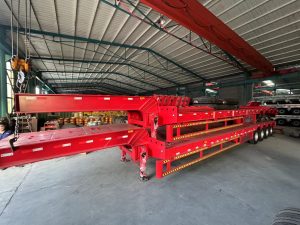
Step deck trailers, or drop deck trailers, are like flatbeds with a clever twist. Instead of one flat level, they’ve got two decks – an upper section and a lower section. The upper deck sits above the tractor unit and runs about 10-13 feet long. The lower deck is where the magic happens – it sits just over 3 feet off the ground and stretches 38-40 feet, allowing for the transport of taller loads.
This design is brilliant for one specific reason: height. When you’ve got cargo that’s too tall for a traditional flatbed trailer but not quite tall enough to need special permits, step decks are your answer.
Perfect for:
- Construction equipment that’s just a bit too tall
- Industrial machinery
- Anything that pushes the maximum height envelope
Legal specifications:
- Same length and width as flatbeds (48-53 ft long, 8.5 ft wide) with a maximum capacity similar to flatbeds.
- But here’s the kicker – height limit jumps to 10 feet
- Weight capacity: 48,000 pounds
Lowboy Trailers – For the Really Big Stuff

When people talk about lowboy trailers, they’re usually dealing with some seriously heavy equipment. These double drop trailers get their name from their extremely low deck height, achieved through not one but two drops in the trailer bed. There’s a drop right after the gooseneck (that curved front section), and another drop before the rear wheels.
This design serves a very specific purpose – getting massive, tall equipment and large equipment from point A to point B without needing special height permits. Plus, you can add extra axles to handle more heavy loads, which is why you’ll see some lowboys carrying truly enormous loads.
What you’ll typically see on lowboys:
- Bulldozers and excavators
- Other heavy construction equipment
- Industrial machinery that’s both heavy and tall
- Basically anything that makes you stop and stare when it goes by
Legal load specs:
- Width: 8.5-10 feet
- Weight: Starts at 40,000 lbs with two axles, but can go up to 80,000+ lbs with additional axles
- Well length: 24-29.6 feet
- Height clearance: 11.5-12 feet for freight, 14 feet overall
Dry Van Trailers – The Workhorses of General Freight
If you’ve seen trucks on the highway, you’ve definitely seen dry vans. Compared to flatbed trailers, these enclosed dry van trailers can protect cargo from weather and theft. They’re not fancy, but they get the job done for a huge variety of goods, making them a lower cost, the most common type of trailer for transporting cargo.
Most dry vans load from the rear, typically at loading docks, though some newer models allow side loading or even have moving floors for easier unloading.
Common cargo:
- Electronics and sensitive equipment
- Furniture and household goods
- Packaged consumer products
- Pretty much anything that needs protection from the elements
Standard specs:
- Length: 48-53 feet
- Height: 13.5 feet
- Weight capacity: 42,000-45,000 pounds
- Width: About 8.2 feet internally
Refrigerated Trailers (Reefers) – Keeping Things Cool
Reefer trailers are essentially dry vans with a serious temperature control system and climate control system. They’re insulated and equipped with refrigeration units that can maintain precise temperatures – crucial for perishable items, pharmaceuticals, and anything else that’s temperature-sensitive.
The refrigeration unit typically sits at the front of the trailer and can maintain temperatures anywhere from deep freeze to just keeping things cool.
What needs the cold treatment:
- Fresh produce
- Meat, dairy, and other perishables
- Pharmaceuticals and medical supplies
- Flowers and plants
- Anything that spoils if it gets too warm (or too cold)
Tanker Trailers – For Liquid Cargo
Tanker trailers have that distinctive cylindrical shape for good reason. The round design distributes pressure evenly, keeps the center of gravity low, prevents liquid from sloshing around too much, and makes cleaning easier. They’re typically made from aluminum or stainless steel, depending on what they’re designed to carry.
Common liquids:
- Fuel and petroleum products
- Chemicals (with appropriate safety equipment)
- Food-grade liquids like milk or cooking oil
- Even some dry bulk materials in pneumatic tankers
Key specs:
- Maximum gross weight: 80,000 lbs
- Length: 48-53 feet
- Width: 8.5 feet
- Height: Up to 13.5 feet
Dump (Tipper) Trailers – Gravity-Powered Unloading
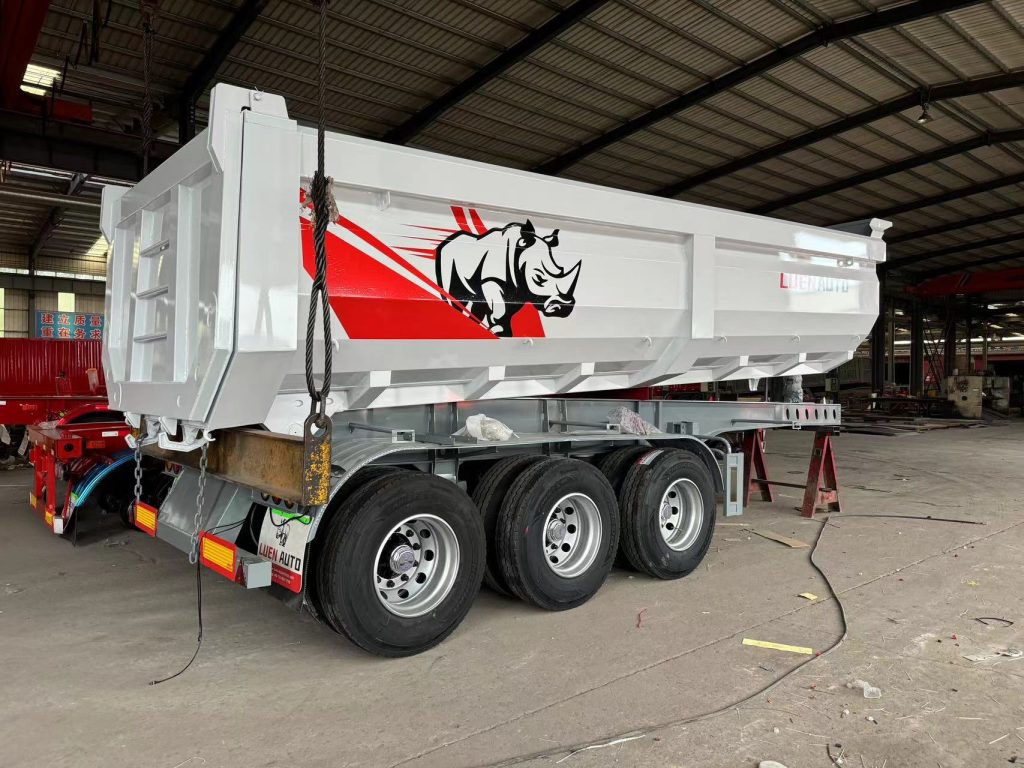
Dump trailers use hydraulic systems to tip their beds and let gravity do the unloading work. They come in several configurations depending on how and where you need to dump the load.
End dump trailers work like most dump trucks – the front lifts up and everything slides out the back. They’re simple but can be unstable on uneven ground.
Side dump trailers tip to one side, which is more stable and allows for faster dumping cycles.
Bottom dump trailers (also called belly dumps) open from the bottom, allowing material to be spread in a line rather than dumped in a pile.
Perfect for:
- Gravel, sand, and other construction materials
- Agricultural products
- Waste and debris removal
Specialty Trailers – For Unique Challenges
The trucking world has developed some pretty specialized trailers for unique cargo needs. Curtainsiders have flexible side curtains for easy loading and maximum cargo weight handling. Extendable trailers can stretch to accommodate longer loads. Car carriers transport multiple vehicles at once. Conestoga trailers combine the loading flexibility of flatbeds with weather protection.
Getting the Legal Stuff Right
Every trailer type comes with specific legal requirements for dimensions and weight limits, including the necessity for a rear underride guard. These aren’t just suggestions – they’re strictly enforced to ensure road safety and traffic safety while preventing damage to bridges and infrastructure. The rules can vary by state, so it’s always worth checking local regulations before hitting the road.
Getting caught over limits can result in hefty fines, delays, and even having to off-load cargo on the spot. Trust me, it’s much easier to plan properly from the start.
How to Pick the Right Trailer for Your Needs
Choosing the right trailer isn’t rocket science, but it does require thinking through several factors:
What are you hauling? The type, size, and weight of your cargo is obviously the starting point. Liquid cargo needs a tanker, perishables need refrigeration, and oversized equipment might need a lowboy.
How are you loading and unloading? If you need crane access, a flatbed makes sense. If you’re working with forklifts, you might want side access. Standard dock loading? A dry van or reefer will work fine.
What’s your route like? Some trailers handle rough terrain better than others. Highway hauling is different from construction site deliveries.
What are the legal requirements? Make sure your chosen trailer can legally carry your load on your intended route.
What’s your budget? Different trailer types have different operating costs, from fuel efficiency to maintenance requirements.
The key is balancing all these factors to find the setup that’s most efficient and cost-effective for your specific situation.
Wrapping It All Up
Understanding the different types of semi trailers on the road today really comes down to matching the right tool to the job. Each trailer design type has evolved to solve specific transportation challenges, and using the right one can make the difference between a profitable haul and a costly headache.
Whether you’re just starting out in trucking or you’re looking to expand your fleet, taking the time to understand these most common trailers and different trailer types will pay off in better decision-making and a better understanding of more efficient operations. The freight industry depends on getting the right cargo to the right place at the right time, and having the right trailer is a big part of making that happen.
When in doubt, don’t hesitate to consult with industry experts or equipment dealers who can help you navigate the options and find the best fit for your specific needs. After all, the right trailer choice today can set you up for success down the road.