English
 Spanish
 French

Lowboy Trailer Dimensions: Comprehensive Guide
Understanding lowboy dimensions isn’t just important—it’s absolutely essential for anyone serious about hauling heavy and oversized equipment safely and legally.
Let’s face it: lowboy trailer dimensions directly determine what you can transport and whether you’ll stay compliant with transport laws. Get this wrong, and you’re looking at hefty fines, dangerous situations, or worse—equipment damage that could cost thousands.

LUEN Lowboy Trailer
Standard Lowboy Trailer Dimensions: Key Specifications
Here’s where things get practical. Lowboy trailer length typically spans from 24 to 60 feet overall, though you’ll find the sweet spots at 48, 53, and 60 feet for most standard hauling operations. These measurements aren’t arbitrary—they’re carefully designed to accommodate the widest range of heavy equipment while maintaining road compatibility.
The lowboy trailer height becomes crucial when you’re dealing with tall cargo. Deck height usually sits between 18 and 24 inches, creating that essential low loading platform that gives you maximum clearance for towering freight. This low profile is what separates lowboys from standard trailers—it’s the difference between legal transport and needing costly permits.
Now, let’s talk width limitations. How wide is a lowboy trailer? The standard answer is 8.5 feet (102 inches), and there’s good reason for this specification. This width ensures you can navigate highways legally without the headache of special permits for most standard loads.
But what about those exceptionally long items? That’s where extendable decks come into play. These versatile solutions can significantly increase your effective deck length, transforming your trailer’s capability when you need to transport items that exceed standard dimensions.
Always review lowboy trailer specs from manufacturers before committing to any haul. This step ensures your selected trailer actually fits your specific cargo requirements and route constraints—a critical verification that prevents costly mistakes down the road. LUEN Lowboy Trailer offers comprehensive specifications and detailed engineering data for each model, helping you make informed decisions based on precise measurements and proven performance standards.
Remember: oversize permits become mandatory when your total width, height, or length exceeds legal limits. Plan for this early in your transport planning process.
Axle Configurations and Their Impact on Dimensions
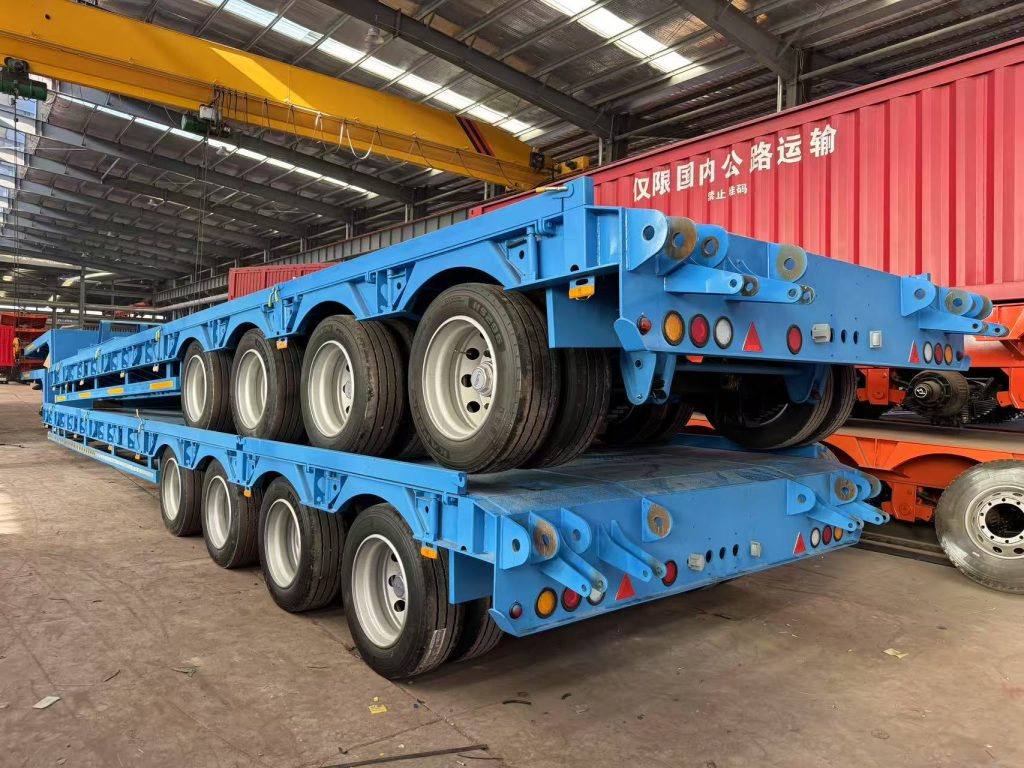
Let’s break down how trailer axle setups affect your hauling capabilities. You’ll typically encounter 2, 3, or even more axles, depending on the load capacity you need to achieve.
Here’s the key insight: more axles don’t just allow for distributing heavier weights—they fundamentally increase your payload limit while dramatically improving trailer stability during transport. This isn’t just about meeting legal requirements; it’s about ensuring your valuable cargo arrives intact.
Axle spacing directly impacts both deck length and overall balance when you’re hauling oversized loads. Get this wrong, and you’ll face handling issues that could compromise safety or damage your equipment.
The double drop or lowboy design cleverly lowers deck height to accommodate taller items within legal transport limits. This engineering solution is what makes lowboy trailers indispensable for specific types of heavy hauling.
Don’t overlook this factor: proper trailer axle configuration also influences turning radius and overall trailer maneuverability. Tight job sites and urban environments demand careful consideration of these spatial requirements.
Dimensions Compliance and Safety Requirements
Legal interstate transport typically restricts lowboy trailer width to that standard 8.5 feet, while overall cargo height usually caps at approximately 12 feet. These aren’t suggestions—they’re hard limits that determine whether your haul proceeds legally or gets stopped at weigh stations.
Understanding swing clearance becomes critical for safe load placement. This measurement represents the space your trailer requires during turns, and inadequate clearance planning can result in accidents or property damage.
Your trailer axle configuration must comply with both bridge laws and road weight limits. These regulations vary by jurisdiction, but the principles remain consistent: distribute weight properly, and stay within legal limits.
The relationship between trailer length and deck height directly impacts your maximum payload capacity. These specifications must align perfectly with safety regulations—there’s no room for approximation when dealing with heavy equipment transport.
Careful dimension planning serves as your primary defense against accidents caused by overloading or unstable loads. Think of it as insurance policy written in steel and regulations.
Optimizing Lowboy Trailer Selection for Heavy Hauls
Choosing the right deck length and trailer height requires matching your specific cargo size with your intended transport route. This isn’t a one-size-fits-all decision—each haul demands individual consideration.
Ensure your trailer axle configuration can actually support both the total weight and proper load distribution. Overlooking this fundamental requirement leads to equipment failure or regulatory violations.
Route planning becomes critical when you’re considering overhead clearances, sharp turns, and road width limits. A route that works for standard cargo might be impossible for your lowboy dimensions.
The goal is balancing lowboy trailer specs with your operational needs for genuinely efficient and safe transport. This balance point is where successful heavy hauling operations thrive. LUEN Lowboy Trailer has engineered their fleet with this principle in mind, offering optimized axle configurations and deck specifications that deliver maximum payload capacity while maintaining road compliance and operational flexibility.
Lowboy vs Removable Gooseneck (RGN) Trailer Dimension Comparison
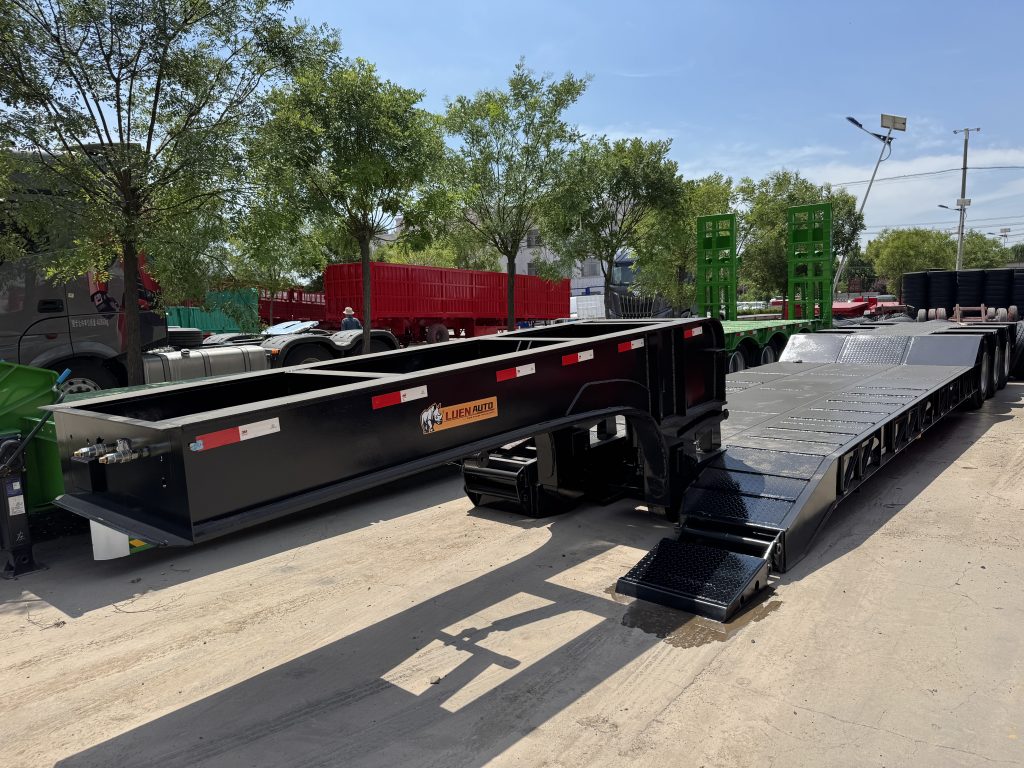
LUEN RGN Trailer
Let’s examine why the height of lowboy trailer matters so much in this comparison. Lowboy trailers maintain deck height between 18–24 inches, significantly lower than RGN trailers which typically range from 50–60 inches. This difference fundamentally changes what you can transport legally.
Both trailer types generally share that 8.5 feet legal width, though lowboys can feature detachable goosenecks for enhanced loading flexibility when you need it most.
For extremely oversized loads, you might need wider trailers reaching 10 or 12 feet, but these require special permits and careful route planning. The lowboy trailer specifications become even more critical in these scenarios.
Lowboy trailers earn preference for taller loads precisely because their low deck reduces required clearance. It’s a simple physics advantage that translates into real operational benefits.
RGN trailers offer easier loading for drive-on equipment via their detachable ramps, but you sacrifice that crucial low profile that makes lowboys so versatile.
FAQ Section: Addressing Common Dimension Questions
What creates extra costs for oversized loads? Additional expenses stem from permits, required escort vehicles, and route restrictions that limit your transport options. These costs add up quickly, so factor them into your pricing calculations early.
How do I determine ideal trailer axle count? Your decision hinges on total load weight and distribution requirements. More axles increase weight capacity, but they also affect maneuverability and costs. Consult with equipment specialists who understand your specific hauling needs. LUEN Lowboy Trailer provides expert consultation services to help determine the optimal axle configuration for your specific applications, ensuring you get maximum efficiency without over-engineering your solution.
What’s involved in obtaining special permits? Special permits require detailed load specifications, size measurements, and comprehensive route information submitted to relevant transport authorities. Start this process early—permit processing takes time.
How does suspension type affect lowboy height? Suspension choice directly impacts both lowboy height and load handling characteristics. Hydraulic suspensions offer height adjustments, providing flexibility for loading operations and navigating obstacles.
What maintenance affects lowboy trailer specifications? Regular maintenance includes systematic checks on tires, brakes, axles, and electrical systems to ensure continued specs compliance. Neglecting maintenance compromises both safety and legal compliance.
What should pre-trip inspections cover? Focus on weight distribution verification, load security confirmation, and dimension legality checks. These inspections prevent costly delays and safety incidents.
What mistakes should I avoid? Avoid overloading or creating uneven loads that risk instability and violate dimensional laws. These shortcuts lead to accidents, fines, and damaged equipment.
How do I choose the best routes? Select routes that avoid low bridges and narrow roads, minimizing transport risks related to your specific lowboy dimensions. Route planning software helps identify potential obstacles.
How do weather conditions affect transport? Weather significantly impacts load stability and road safety, especially with low clearance trailers. Plan for weather delays and adjust your transport schedule accordingly.
This comprehensive guide integrates essential lowboy trailer dimensions, specs, and trailer axle configuration information to support safe, legal, and efficient heavy equipment hauling. Use this knowledge to match trailer capabilities with cargo requirements and transport regulations effectively. For reliable lowboy trailer solutions backed by proven engineering and comprehensive support, LUEN Lowboy Trailer stands ready to help you tackle your most challenging heavy haul operations with confidence and compliance.